Goldman Sachs Group Inc. (GS) initiated coverage of Intel Corp. (INTC) this week with a neutral rating and a $150 price target, based on TipRanks’ report. That implies only about 12% upside, modest given the stock’s run over the past year.
The bigger signal is who wrote it, not the number itself.
Goldman analyst James Schneider upgraded AMD to buy from hold seven weeks earlier, hiking its target to $450 from 240, implying 27% upside, according to CNBC.
He used nearly identical reasoning both times, citing demand from agentic AI workloads. For AMD, that thesis earned an upgrade. For Intel, it only earns a hold.
Intel is still a legacy hardware company at heart
Part of the hesitation traces back to what Intel still is. It built its business selling processors as physical hardware, a model built around manufacturing scale rather than the AI compute platforms Wall Street now pays for.
AMD and Nvidia spent the past decade reorienting around data center accelerators, while Intel is only beginning that shift, making Goldman’s caution easier to understand than to dismiss.
Schneider’s case for Intel rests on its foundry ambitions and its role as a domestic chip champion amid Washington’s push for onshore manufacturing, he wrote in the note.
Related: Intel surge hints far beyond Apple news
He called that potential upside optionality, according to CNBC, language that signals possibility, not a reason to buy. With AMD, the AI argument was the headline. With Intel, it reads like a footnote.
The gap shows up in visibility, too. With AMD, Schneider cited a specific six gigawatt GPU deployment at Meta and stable share at Microsoft.
Intel’s note offered no comparable customer commitment, just the promise that outside chipmakers might eventually use its factories.
Even with recent White House headlines detailing a preliminary US chip manufacturing agreement between Intel and Apple, analysts caution that actual volume production remains years away.
Intel’s foundry business did show progress last quarter. The unit generated $5.4 billion in revenue, up 20% sequentially on higher EUV wafer output, while external foundry revenue reached $174 million, according to a Barchart analysis.
That external figure matters most, since it shows whether anyone besides Intel is actually paying to use its factories. For now, the answer is almost no one.
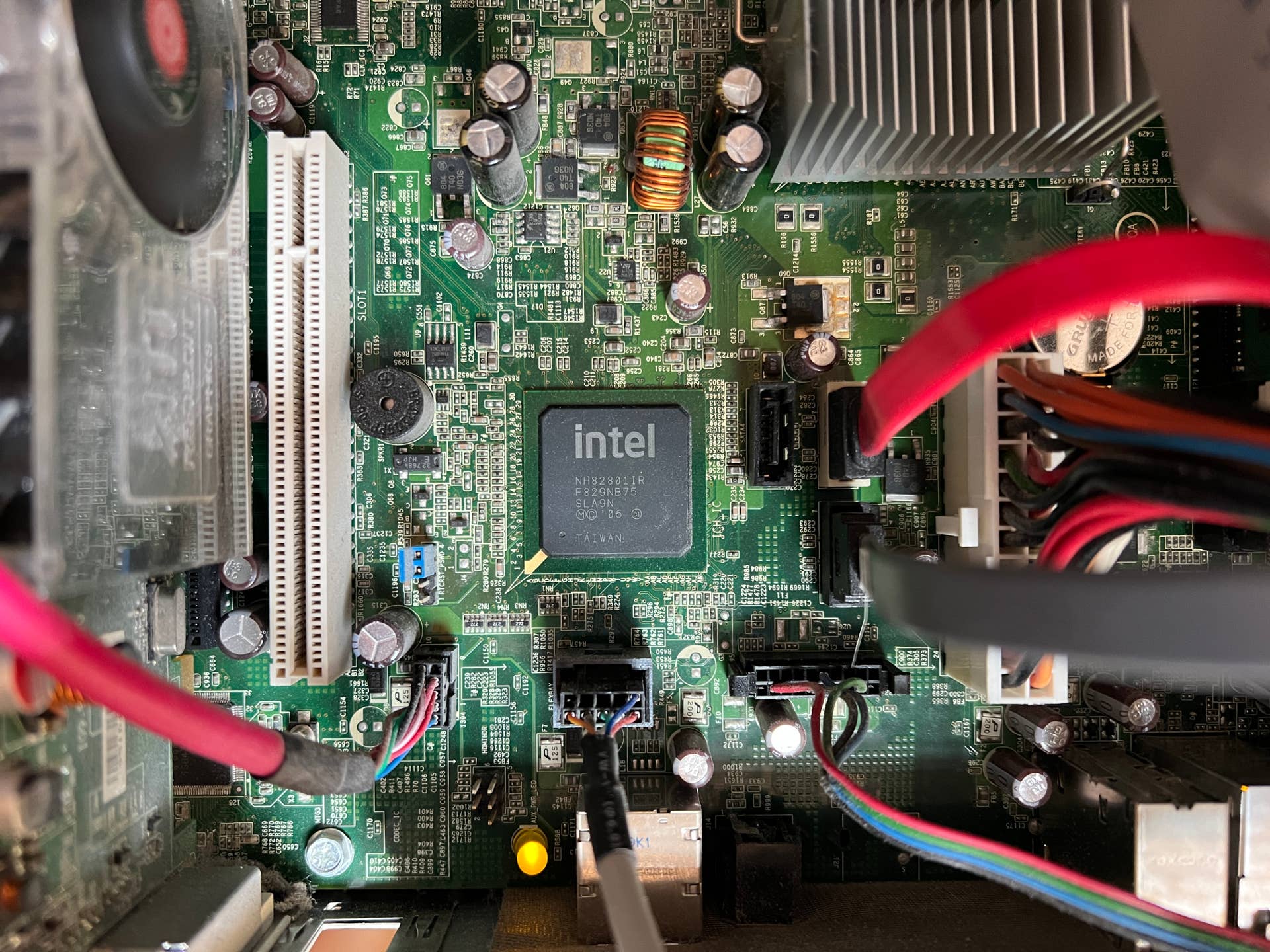
FinkAvenue / Getty Images
A quantum computing policy tailwind could still help Intel later
One development could eventually support Intel’s case beyond what Goldman priced in.
President Donald Trump signed executive orders this week to accelerate quantum computing manufacturing and secure domestic supply chains, a White House fact sheet confirms.
Commerce Secretary Howard Lutnick also pointed to a 2-billion-dollar CHIPS Act allocation toward quantum chip manufacturing, including a direct fab investment, according to Fox News.
None of that money is tied to Intel, but it reflects the same domestic manufacturing logic behind Goldman’s champion status argument.
Wall Street can’t agree on what 150 dollars means
Other analysts have landed near the same target with a different read. Melius Research’s Ben Reitzes raised his Intel target to $150 with a buy rating, the highest on the Street, according to TheStreet.
Bank of America’s Vivek Arya has warned that any real foundry payoff is still years away, even in a best-case scenario.
More Intel:
- Bank of America resets Intel stock price target
- Intel CEO gives investors a reality check
- Cramer’s Intel bet rests on one unproven number
Most Wall Street experts are much more cautious than either. Intel’s average price target sits at roughly $101.57, well below Goldman’s and Melius’, according to a market wrap from ts2.tech.
Options trading echoes that caution. Even though Intel’s stock price has been rising toward record highs, fewer people are buying “call options” (bets that the stock will go up) compared to the usual average over the last 20 days.
Three analysts, one number near $150, three different conclusions, and Goldman’s neutral stance simply avoids betting on which version wins.
The real divide is about conviction, not chips
Goldman said plainly that AMD and Nvidia have stronger revenue visibility and better risk and reward at current valuations than Intel, and their recent analyst note shows it.
Investors can underwrite AMD’s roadmap against a named customer and a specific gigawatt figure.
Intel is still asking them to underwrite a turnaround built on customers it has not yet named. Intel’s stock has rallied hard on the bet that the turnaround is real.
Goldman’s neutral call suggests the easy money on that bet may already be made, leaving the next leg dependent on proof rather than promise.
Intel could convert its foundry pipeline, and Washington’s quantum and chip manufacturing push, into AMD-style conviction. That will decide whether this rating ages into a missed call or a well-timed pause.
Related: Intel CEO gives investors a reality check
#Goldman #won039t #pick #Intel #rivals