PwC’s global chairman just dropped one of the market’s biggest contrarian views about AI, in that mass adoption points to mass layoffs.
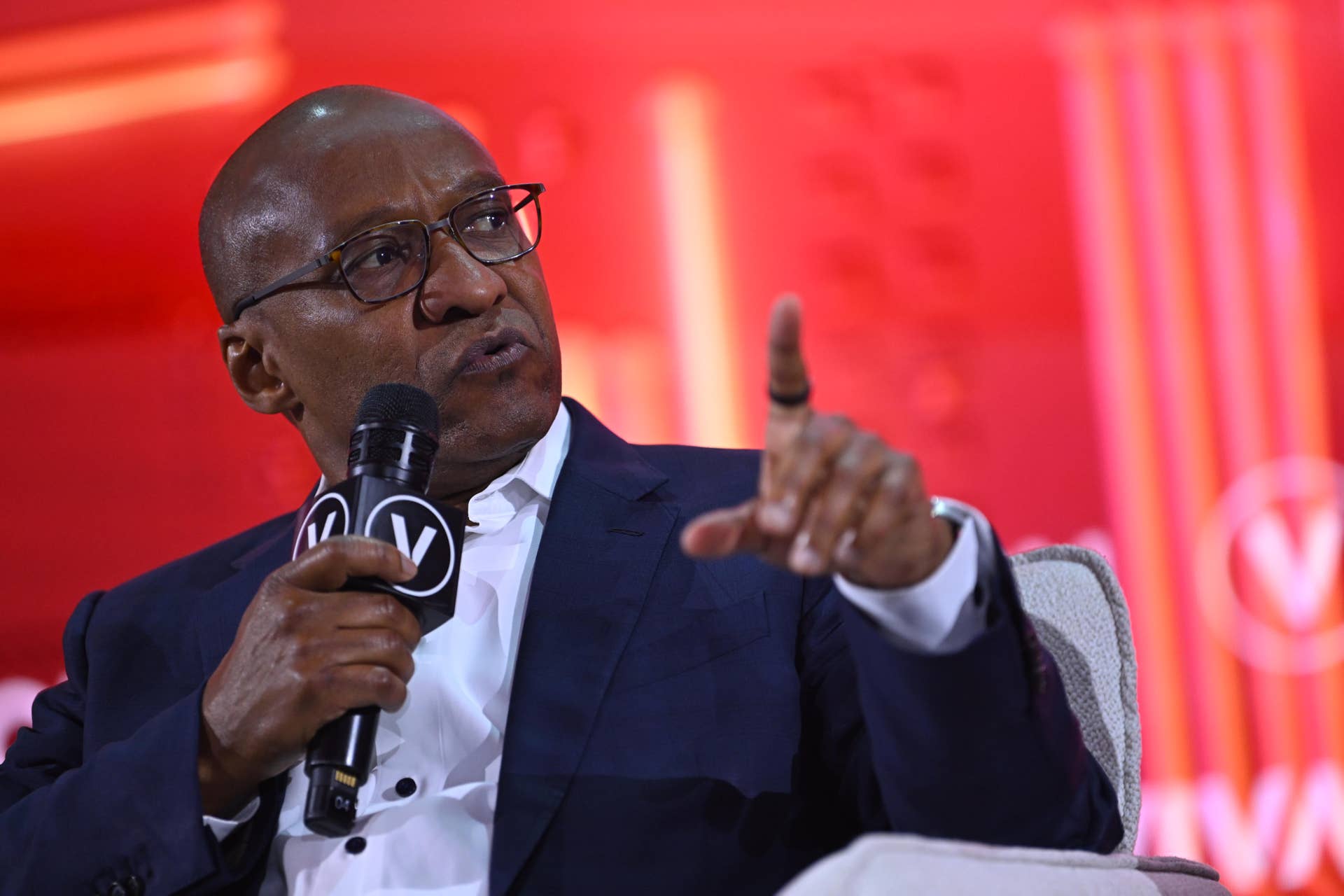
In a CNBC interview at VivaTech in Paris on June 18, PwC Global Chairman Mohamed Kande said that businesses using AI “at scale” aren’t simply cutting workers. In fact, they are often adding them, as AI creates new demand around implementation, governance, data, products, and client delivery.
For context, the layoff narrative has effectively dominated the AI debate across tech, consulting, and white-collar work.
However, Kande’s point is different: Businesses moving the fastest are using AI to increase output, redesign jobs, and boost productivity, not just shrink payrolls.
PwC’s own jobs data backs the shift, showing stronger productivity, wage, and headcount growth at the most AI-exposed companies.
What PwC’s chairman said about AI layoffs
Mohamed Kande just pushed back on what can be described as the simplest version of the AI layoff story.
Speaking at the VivaTech conference in Paris, Kande said businesses adopting AI “at scale” aren’t simply cutting workers. His thesis is that the firms moving the most on AI are increasing headcount because the technology lets them expand what employees can do.
More AI:
- Goldman Sachs has blunt message for AI stock investors
- Microsoft CEO sends a blunt warning on AI and the tech ecosystem
- The next AI infrastructure race has nothing to do with chips
In his view, AI gives workers “superpowers,” making judgement, collaboration, emotional intelligence and adaptability more valuable.
PwC’s own jobs data supports Kande’s point, but with a caveat. The firm’s 2026 AI Jobs Barometer found that companies most exposed to AI have grown headcount faster than the least-exposed firms.
However, it also found out that entry-level work is evolving fast, with junior roles requiring senior-level skills.
Kande isn’t saying AI comes with no labor risks but he said the bigger shift is from replacement to redesign, where businesses require fewer routine tasks but more workers who can use AI to create value.
That split also shows up in how the top tech leaders frame AI and jobs.
According to Reuters reporting from VivaTech in Paris, Jeff Bezos said AI could create labor shortages instead of just creating mass redundancy.
Moreover, a Business Insider report showed that Sam Altman said in a CNBC interview that the companies he sees adopting AI most aggressively are also hiring the most.
Additionally, in a Wall Street Journal interview, Microsoft CEO Satya Nadella argued AI should augment work broadly, not concentrate economic power in a few model companies.
Benjamin Girette/Bloomberg
Why AI layoffs are more complicated than they look
- Challenger data shows the pressure is real: U.S. employers announced 97,006 job cuts in May, with AI being the top reason for a third straight month, according to Seeking Alpha.
- Big Tech is still cutting around AI priorities:
Meta Platforms announced a major workforce reduction, cutting about 8,000 jobs across multiple departments amid mounting AI costs.LinkedIn planned to cut about 5% of its workforce, roughly 875 jobs, according to Reuters.
Microsoft had been preparing thousands of cuts after an $80 billion AI capex plan.
- Technology was the hardest-hit sector, with 38,242 announced cuts in May, the highest monthly total since August 2024, according to Bloomberg.
- The labor market is not breaking yet:Reuters said that jobless claims remain elevated but stable, while May payrolls rose by 172,000 and unemployment held at 4.3%.
AI winners may hire more, but laggards may still cut
For investors and executives, Kande’s message changes the narrative on how AI adoption should be judged.
AI tools need to substantially improve productivity, revenue growth, margins and speed effectively, becoming an operating model test.
Perhaps the bull case is that companies making use of AI can grow a lot quicker without choosing between headcount and bottom-line expansion.
If AI helps workers handle more clients, launch new services, shorten delivery times and improve decision-making, then hiring and margin expansion can happen together. That is exactly the scenario Wall Street is mapping, with more output per employee, stronger returns on capital and higher-value work.
However, there is also a flipside to consider.
PwC’s own CEO survey found that 56% of CEOs had seen no significant financial benefit from AI so far, which shows many businesses still stuck in pilots and experimentation.
For them, AI might look like a cost burden before it becomes a growth engine. That is also why labor impact might split sharply. AI winners might look to hire because they expand.
Moreover, laggards might cut because they fail to create enough new value.
Related: Wells Fargo revamps S&P 500 target for rest of 2026
#PwC #Chairman #Challenges #Layoff #Narrative