BMW has lowered its outlook for 2026, a decision that was heavily influenced by challenges in the critical Chinese market.
China has consistently been one of BMW’s largest markets and a major profit driver, so a slowdown in that region has a serious ripple effect on the company. The German luxury automaker now anticipates significantly lower profits and free cash flow in the second quarter of 2026 compared with the same period last year.
The announcement came after the China Passenger Car Association once again revised its market forecast downward, most recently on Monday, June 15. For BMW (BMWYY), lower sales in China and the Asia-Pacific region have overshadowed strong sales in the U.S. and Europe, showing that even high-end automakers are left vulnerable when their most valuable market undergoes a decline.
BMW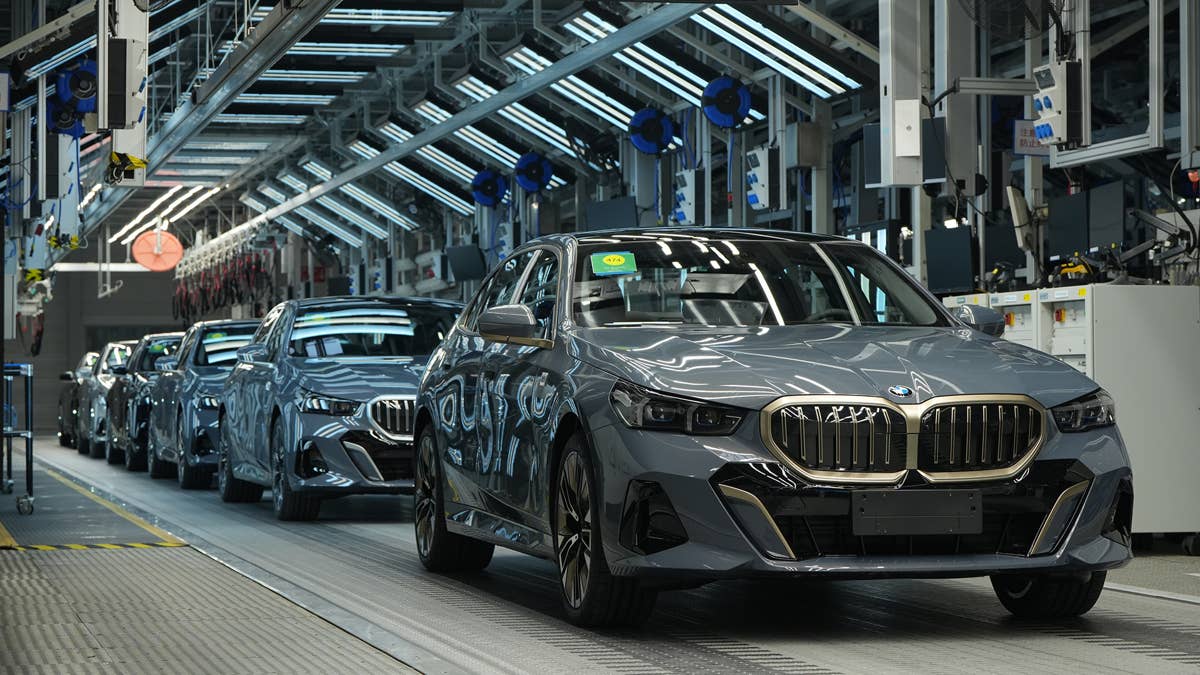
BMW cuts guidance as China’s slowdown deepens
Intensified competition in China and across the Asia-Pacific region has compelled BMW to revise its guidance for the 2026 financial year. Adding further pressure is the conflict in the Middle East, which affects energy prices and the company’s cost structures.
Given these market conditions, the BMW Group now expects a marginal decrease in deliveries this year. More notably, it slashed its automotive EBIT margin guidance to between 1% and 3%, down from 4% to 6% previously.
Group profit before tax is now expected to decline significantly, whereas previously, a moderate decline was expected. BMW defines a significant group profit decrease to be a figure greater than 15%, reports Reuters.
More Automotive:
- BMW doubles down on humanoid robots after a U.S. test run
- Ford begins testing tech that will change Americans’ minds about EVs
- Mercedes wants AMG to become a much bigger profit machine by 2030
The company anticipates that automotive free cash flow will exceed €2.5 billion (~$2.9 billion), while its dividend payout and share repurchase plans have not been adjusted.
These lower expectations result from a transformed competitive landscape in the Chinese auto market, where domestic brands have expanded rapidly and dramatically shortened vehicle production cycles. This has led to intense pricing pressure on legacy automakers.
How China’s pricing war affects luxury automakers
China is the largest auto market in the world and has historically been a key profit center for BMW. Despite the decline there over the last year or so, BMW still delivered 144,072 vehicles in China in the first quarter of 2026, comfortably ahead of the U.S. (90,883) and Germany (62,582).
German luxury brands like BMW, Mercedes-Benz, and Porsche have typically commanded substantial pricing power in the region. Customers there were willing to pay premium prices to own a vehicle from one of these brands, as they were also buying into the status and heritage of these marques.
Related: BMW CEO has blunt new message on Trump’s tariff threat
However, domestic auto brands like BYD, Xiaomi, and NIO now offer comparable technology and luxury at much lower prices. This has eroded some demand for German vehicles. For instance, Porsche saw profits collapse by 92% in 2025, partly due to a sales slump in China, according to Autoblog.
Ultimately, German luxury marques can no longer get by on image alone and must work harder to maintain margins.
What BMW’s forecast means for investors and buyers
BMW is now facing pressure on margins and profitability. There are also questions around how it will remain competitive in the months and years ahead. The same challenges are being faced by other German brands, to lesser or greater degrees, suggesting that the pressures facing China’s auto market have expanded beyond mass-market brands.
For customers, the picture is more encouraging. Intensified competition means faster innovation, access to the latest technologies, and more incentives.
The BMW Group is not standing still, though.
“We will adapt our current structures and processes to the drastic downturn in market conditions,” said Chairman of the Board of Management, Milan Nedeljkovi?. He also expressed enthusiasm around the brand’s new Neue Klasse lineup, which he described as “the strongest BMW portfolio in history.”
BMW’s brand remains strong, but reputation alone is no longer enough to protect its margins in China. A fresh lineup, cost reduction initiatives, and new efficiency measures will likely play a greater role as the company adapts to a changing competitive landscape.
Related: One number shows how much trouble German carmakers are in
#BMW039s #biggest #market #biggest #headache