AST SpaceMobile (ASTS) launched three satellites into orbit on Wednesday, 17th June, and the stock jumped 6% in response.
The reaction looks like a simple relief rally after a clean mission. It is actually a direct rebuttal to the specific argument Wall Street’s bears have been making for the past six weeks.
AST SpaceMobile is building a space-based cellular network designed to connect ordinary smartphones directly to satellites, without towers or special hardware.
The company has agreements with nearly 60 mobile network operators worldwide, including AT&T, Verizon, and Vodafone, representing more than 3 billion subscribers combined.
That carrier network is the entire business case: AST does not need to convince consumers to buy anything; it needs satellites in orbit that its partners’ phones can already talk to.
What were the skeptics actually arguing?
The bear case was about execution, not opportunity. A Blue Origin rocket test failure in late May raised fears that AST’s launch partners could not deliver satellites to orbit on schedule.
Related: Elon Musk drops trillion-dollar message to SpaceX investors
Deutsche Bank cut its rating on AST SpaceMobile to Hold from Buy and lowered its price target shortly after, citing the risk that launch delays would push back the company’s 2026 deployment target. Barclays followed with its own price target cut, citing an unattractive risk-reward profile.
Those downgrades arrived on top of an already rough stretch. AST SpaceMobile lost a satellite when BlueBird 7 failed to reach its intended altitude and had to be deorbited.
The company then missed both earnings and revenue estimates badly in May, posting a loss of 66 cents per share against an expected loss of 21 to 23 cents, while revenue of $14.7 million came in well below the roughly $39 million analysts had forecast. Shares fell more than 13% the following day as investors absorbed the miss, according to Investing.com.
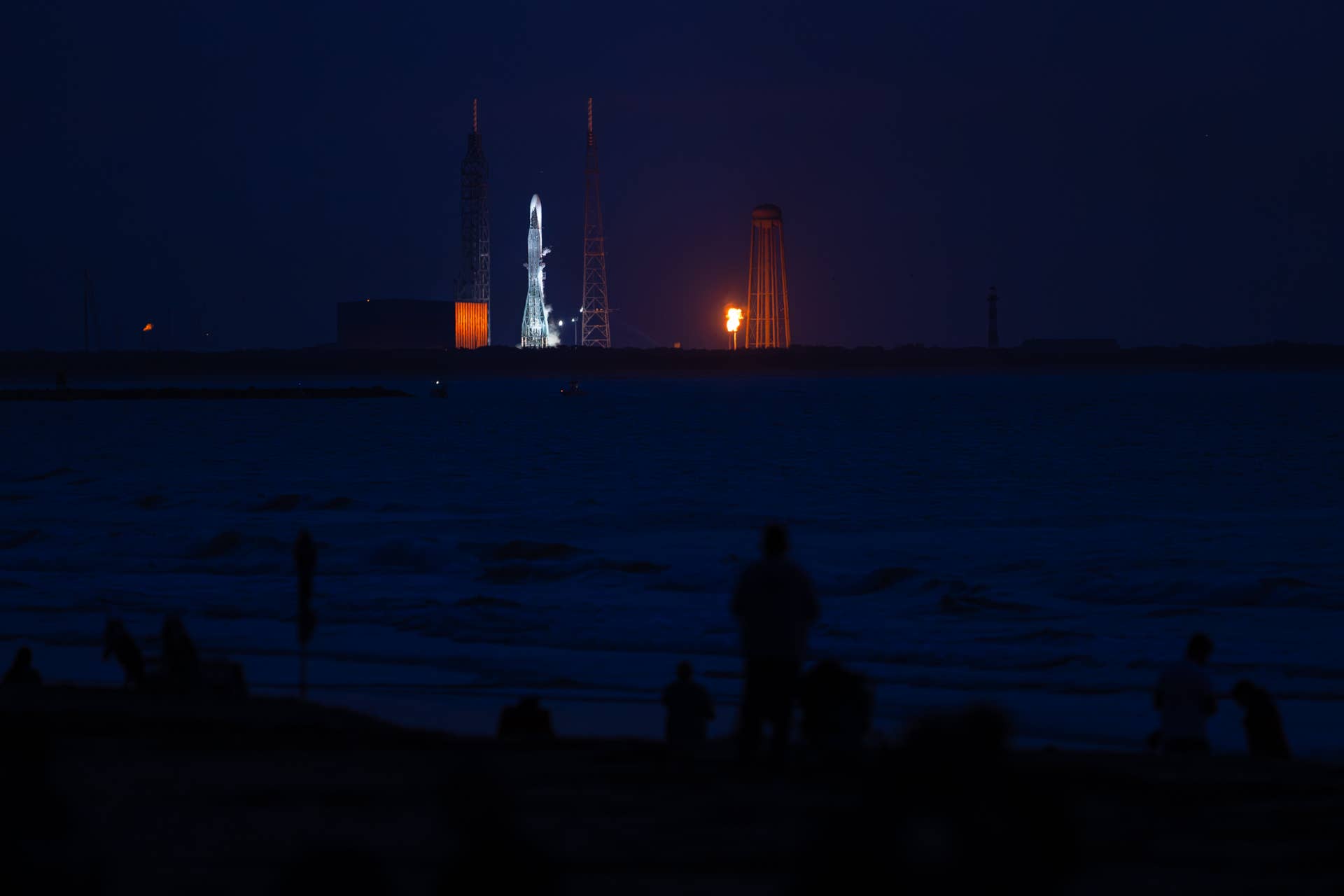
NurPhoto / Getty Images
Why does Wednesday’s launch undercut that argument?
The skeptics’ case rested on a chain of doubt: one failed satellite, one rocket partner’s failed test, and a wide earnings miss all pointed toward a company that could not hit its own timeline. BlueBirds 8, 9, and 10 reaching orbit on schedule breaks that chain at its weakest link, which was whether AST could still launch on time after the setback.
CEO Abel Avellan said the launch represents the continued execution of a vision once considered impossible. The company says it is in advanced stages of production through BlueBird 33, with phased arrays completed through BlueBird 28, according to a regulatory filing.
That detail matters more than the launch itself. A single successful mission could be luck. A manufacturing line already running several satellites ahead of what just flew is evidence of a repeatable process, which is the exact thing analysts said they could not verify.
What does this mean for the stock from here?
Realistically, one launch does not erase a 13% single day decline or a quarter of missed targets.
AST SpaceMobile still trades at a steep multiple relative to its current revenue, and its path to profitability depends on converting carrier agreements into paying subscribers, not just satellites into orbit.
More AST SpaceMobile:
- ASTS adds $10B in market cap on bold industry developments
- AT&T, Verizon back $1.2B broadband bet in space tech leader
- AST SpaceMobile loses $2B in market cap on setback
The company is targeting roughly 45 BlueBird satellites in orbit by the end of 2026, a goal that still requires the manufacturing cadence to hold for the rest of the year.
What changed is the burden of proof. Before Wednesday, AST had to show it could still execute after a string of setbacks. Now it has a launch on schedule and a stated production pipeline to point to the next time a downgrade cites execution risk.
The skeptics’ argument was never that the technology does not work. It was that the company could not deliver it on time.
The bigger pattern beyond AST SpaceMobile
AST SpaceMobile’s situation reflects a familiar tension in capital-intensive infrastructure buildouts: the market prices execution risk in real time, long before the underlying technology is proven wrong.
Rocket Lab, Intuitive Machines, and other space infrastructure names have faced similar swings, where a single delay or failed test triggers downgrades that assume the worst case, only for the next milestone to reset the narrative entirely.
That volatility is not a flaw in how these stocks trade. It is the cost of investing in companies whose value depends on hitting dozens of sequential milestones with no room for public failure.
AST SpaceMobile’s bears were not wrong to be cautious. They were betting against a timeline, and on Wednesday, the timeline held.
Related: Why Rocket Lab stock tumbled on Nasdaq-100 news
#AST #SpaceMobile #proved #biggest #skeptics #wrong