If there is one segment of the automotive market that has traditionally moved at its own pace, it is the off-road category. Not because it resists innovation – but because it prioritises reliability above all else.
In South Africa, off-roading is closely tied to practicality. Long distances, varied terrain, and limited infrastructure in certain regions means that vehicles are often expected to perform consistently under demanding conditions.
In that context, trust becomes a defining factor in purchase decisions, which is why the current wave of innovation raises a more fundamental question.
As new technologies, design philosophies, and pricing models begin to influence the broader market, to what extent will those changes filter into the off-road segment?
Manufacturers such as Jetour are beginning to explore this space with a different perspective. The approach combines traditional SUV capability with more modern elements – from enhanced in-cabin technology to updated design language – while maintaining a focus on accessibility.
Advanced technology
At the centre of that approach is a deliberate positioning of technology.
“Technology in our vehicles is designed to support capability, not replace it,” says Ke Chuandeng, president of Jetour International.
“It should make off-road driving easier, more controlled, and more accessible.”
While there is clear interest in more advanced features, the core expectations of an off-road vehicle remain largely unchanged. Capability, durability, and ease of use continue to sit at the centre of the value proposition.
What appears to be emerging is not a wholesale shift, but a gradual evolution.
For example, advancements in traction control systems, suspension technology, and driver-assist features are increasingly integrated in ways that enhance rather than replace traditional capability.
In many cases, these technologies are designed to make off-roading more accessible – particularly for drivers who may be newer to the segment.
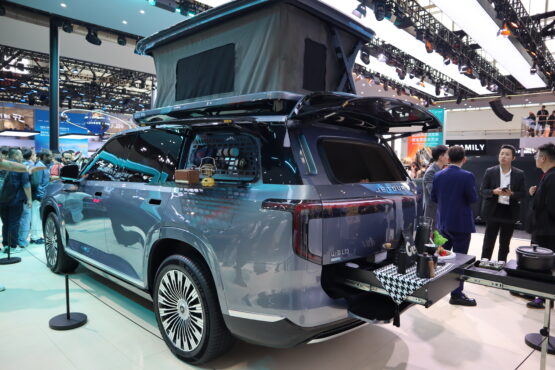
The future isn’t just about where a vehicle can go – it’s about ‘how much more it enables you to do when you get there’. Image: Supplied
“With intelligent systems, even less experienced drivers can handle more challenging terrain with confidence. That’s an important part of how the segment can evolve,” says Chuandeng.
But the transition is not only happening inside the vehicle. It is also happening around it. One of the more notable shifts from newer entrants is a move to position the vehicle within a broader lifestyle ecosystem.
That positioning is also beginning to take shape in the product pipeline.
Models such as the upcoming F700 pick-up and G700 SUV point to a more deliberate push into the off-road and lifestyle segment – vehicles designed not only for capability, but for extended use cases that align with how consumers are increasingly engaging with their vehicles.
In that sense, these are not simply new models. They are expressions of a broader philosophy – one that views the vehicle as a platform for travel, utility, and experience.
Travel+ culture
The idea is simple: the vehicle becomes a platform for travel, not just transport – shifting from building for terrain to building for experience.
That includes integrated accessories and use-case extensions, from camping equipment and modular storage solutions to wearable technology that can interact with the vehicle itself.
In some instances, functionality extends to allowing drivers to control certain vehicle features remotely via connected devices, blurring the line between automotive and consumer tech.
It is a different way of thinking about off-road ownership.
“Our approach is to combine strong mechanical capability with modern features, so customers don’t have to choose between the two,” says Chuandeng.
In practical terms, this begins to align with how many off-road vehicles are already used in markets like South Africa – not just for driving, but for extended travel, camping, and overlanding.
The difference is that these elements are increasingly being considered at the design stage, rather than added as aftermarket options.
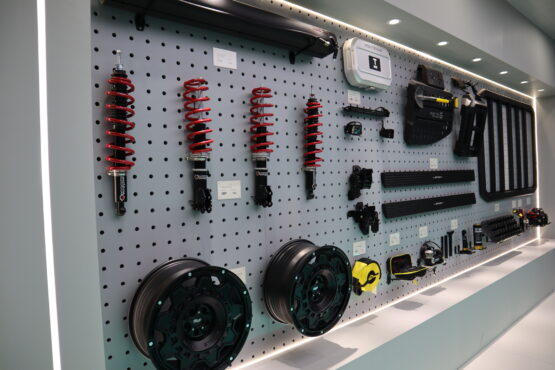
The environments in which off-road vehicles operate continue to demand simplicity, durability and resilience. Image: Supplied
Charging capability now becomes part of that equation.
As vehicles incorporate more electronic systems – and, in some cases, hybrid or electrified components – the ability to power external devices, from camping equipment to portable accessories, becomes a functional advantage rather than a novelty. For a segment built on self-sufficiency, that capability is clearly relevant.
The fundamentals however remain unchanged because reliability is still non-negotiable in this segment.
“We recognise that off-road customers prioritise reliability and real-world usability. Any new technology has to meet those expectations first,” says Chuandeng.
This is where the tension becomes most visible.
On one hand, innovation is expanding what vehicles are capable of – both on and off the road. On the other hand, the environments in which off-road vehicles operate continue to demand simplicity, durability, and resilience.
Electrification adds another layer of complexity to the conversation.
While hybrid systems may offer a transitional pathway, fully electric off-roading still faces practical considerations – particularly regarding range and charging infrastructure in remote areas. As a result, the transition is unlikely to be uniform across all use cases.
Instead, what is emerging is a more measured progression that reflects the realities of the segment.
“The transition in this segment will take time. It’s not about replacing what works, but improving it step by step,” adds Chuandeng.
That step-by-step approach reflects a broader understanding of the market. Rather than forcing change, manufacturers are increasingly introducing it incrementally – allowing consumers to adapt while maintaining the core attributes that define the segment.
In that context, lifestyle integration may prove to be one of the more effective entry points.
Drivers may be slower to adopt entirely new drivetrains or systems, but are often more open to enhancements that improve the overall experience – whether that is convenience, comfort, or the ability to extend time spent off the grid.
“As customer expectations evolve, we believe the segment will evolve with them – but always with capability at the centre,” says Chuandeng.
So, is the off-road market ready to transition? The answer is not a definitive yes or no. It is already beginning to adapt – but in a way that reflects the realities of how these vehicles are used. The shift may not be driven purely by technology. It may be driven by lifestyle.
And in that sense, the transition is less about replacing what has come before and more about expanding what the off-road experience can become.
As Chuandeng says: “The future of off-road isn’t just about where a vehicle can go – it’s about how much more it enables you to do when you get there.”
Brought to you by Jetour.
#Offroad #market #shifts #toughness #lifestyle