The artificial intelligence chip trade is not stopping at GPUs.
Micron Technology (MU) shares rose on July 14 after KeyBanc raised its price target on the memory-chip maker, citing tighter supply and higher prices for DRAM, NAND and high-bandwidth memory, or HBM.
Micron stock was recently trading at $980.55 around midday, up 4.7% from July 13’s close, according to market data. The stock opened at $987.95 and traded as high as $994.80 earlier in the session.
For investors, Micron’s rally put memory pricing back at the center of the AI chip trade, not just Nvidia-style GPU demand.
KeyBanc sees more upside for Micron
KeyBanc analyst John Vinh raised his Micron price target to $1,750, Barron’s reported. The new target implies about 87% upside from Micron’s close of $937 on July 13.
The firm expects memory shortages to persist through 2027, giving Micron a pricing-power argument in a market where AI demand is tightening supply. KeyBanc also forecast DRAM prices to rise 15% to 20% in the third quarter and another 15% in the fourth quarter, according to Barron’s.
NAND flash prices could rise 30% to 40% in the third quarter and another 15% in the fourth quarter. HBM prices could more than double next year.
Related: Veteran analyst drops massive Micron valuation prediction
Key numbers behind the Micron call
- $1,750: KeyBanc’s new Micron price target
- 87%: implied upside from Micron’s Monday close, according to Barron’s
- 15% to 20%: KeyBanc’s expected third-quarter DRAM price increase
- 30% to 40%: expected third-quarter NAND price increase
- More than double: expected HBM price move next year
- 2027: year through which KeyBanc expects memory shortages to persist
Micron’s AI memory case shows up in revenue and supply deals
The company reported fiscal third-quarter revenue of $41.46 billion, up from $23.86 billion in the prior quarter and $9.30 billion in the prior year. Adjusted earnings were $25.11 a share.
The year-over-year jump gives investors a concrete sign that the AI memory cycle is already flowing through Micron’s results.
Micron’s record fiscal Q3 financial results and even stronger outlook for Q4 reflect the strategic value of memory in the AI era.
Reuters reported that Micron has $22 billion in memory-chip supply commitments from 16 strategic customers. The agreements include take-or-pay clauses, cash deposits, and pricing floors.
The $22 billion commitment figure gives Micron’s AI memory story a demand anchor beyond daily chip-stock sentiment. Customers are committing capital to secure supply, rather than relying only on short-term memory purchases.
HBM is a key part of that demand because it works alongside AI processors to handle large workloads and move data quickly. Reuters reported that Micron supplies HBM for Nvidia AI processors, putting the company inside the broader AI hardware supply chain.
For investors, the read-through is straightforward: AI spending can support Micron even when the market conversation starts with GPUs.
Bloomberg / Getty Images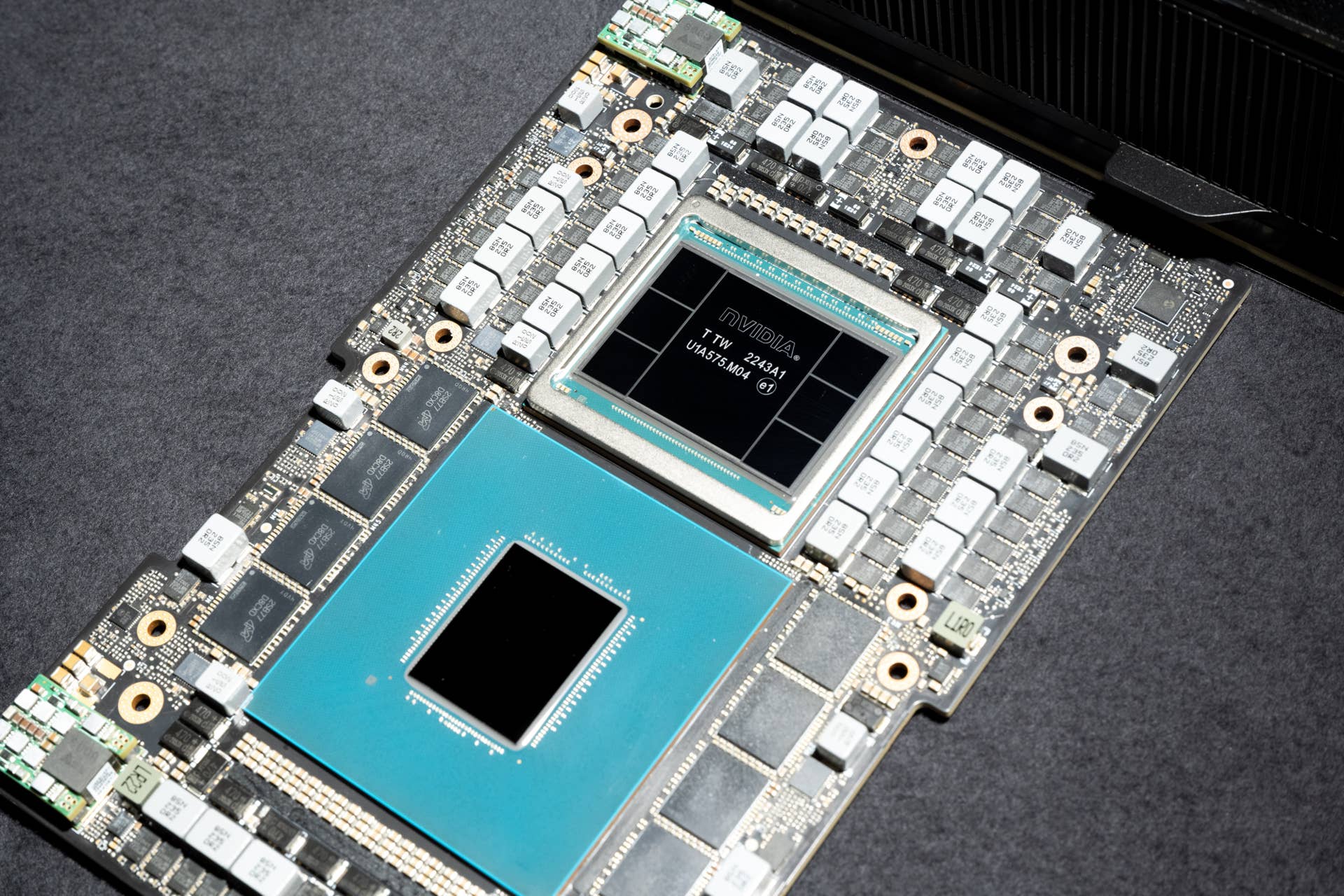
KeyBanc’s call gives Micron a stronger pricing argument inside the AI trade. The next test is whether memory shortages last long enough for DRAM, NAND and HBM strength to keep showing up in Micron’s results.
The risk is still the memory cycle
The same pricing strength lifting Micron can reverse if supply catches up faster than investors expect.
Barron’s reported that Micron fell 4.3% on July 13 before rebounding on July 14, a reminder of how quickly chip-stock sentiment can shift.
The current bull case depends on tight supply lasting longer than in past cycles. If DRAM, NAND or HBM pricing cools faster than expected, Micron’s AI premium could face another test.
Related: Micron Technology’s stock buybacks explained
#Micron #stock #jumps #investors #GPUs #chip #trade