Gold steadied, as investors assessed the fallout from renewed fighting in the Middle East and the prospects for interest-rate hikes to combat inflation.
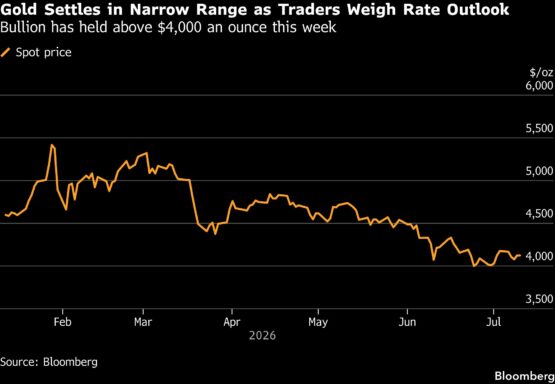
Bullion was near $4 115 an ounce after snapping a three-day losing streak in the previous session. Talks between the US and Iran are continuing, according to an American official, even after this week’s exchange of airstrikes and the reimposition of US oil sanctions on Iran. The clashes jeopardised an interim peace deal signed last month and raised uncertainty over the safe passage of energy and other commodities through the Strait of Hormuz.
For gold traders, the flare-up in fighting increases the likelihood of the Federal Reserve keeping borrowing costs higher for longer to deal with the inflationary impact of elevated energy prices. Minutes of the Fed’s June meeting released this week showed some policymakers said there was a case for raising rates, which were ultimately left on hold. Tighter monetary policy is typically negative for bullion, which doesn’t pay interest.
ADVERTISEMENT
CONTINUE READING BELOW
“Hike expectations may now be largely factored in but still could limit gold rallies,” James Steel, chief precious metals analyst at HSBC Holdings Plc, said in a note dated July 9. A strong US dollar “may also put up considerable headwinds to rallies,” he said. The bank cut its 2026 average gold price forecast to $4 560 an ounce.
With an eye toward potential changes at the Fed, new Chairman Kevin Warsh on Thursday announced the leadership of five task forces that will examine the US central bank’s approach to key aspects of policy making. The leaders include prominent academics, former central bankers and corporate executives.
Meanwhile, Fed Bank of New York President John Williams said that, among the drivers of inflation in the US, he’s most focused on demand driven by artificial intelligence. If that persists, it could force the central bank to raise interest rates, he said.
Gold is down by more than a fifth since the Iran war started in late February, with a wave of profit-taking bringing a three-year bull run to an end and pushing the metal briefly below $4 000 recently for the first time since November. There’s little evidence yet, however, that investors are putting on large-scale short positions in anticipation of further declines.
ADVERTISEMENT:
CONTINUE READING BELOW
Central bank buying remains an important support for bullion, with the People’s Bank of China purchasing more gold in June to extend its longest buying streak since at least 2015. The latest survey from the World Gold Council showed that more central banks than ever expect to increase their reserves in the next 12 months.
“We expect greater official sector demand later in the year based on long-term diversification policies,” HSBC’s Steel said. “Also, the retreat in oil prices has relieved pressure on some central banks to sell.”
Spot gold slipped 0.3% to $4 112.95 an ounce at 2:40 p.m. in Singapore, and was down 1.5% for the week. Silver gained 0.2% to $60.06 an ounce. Platinum and palladium also advanced. The Bloomberg Dollar Spot Index, a gauge of the US currency, dropped 0.2%.
© 2026 Bloomberg
#Gold #steadies #traders #weigh #Mideast #tensions #rate #outlook