With an expected total global audience of more than 6 billion people, the 2026 FIFA World Cup is proving to be an attractive, but complicated opportunity for advertisers.
The 39-day tournament, which runs until July 19, features a larger number of teams, matches and cities than its 2022 predecessor. While that means more opportunities to connect with fans, it also means more places marketers have to spend money to get their brands to stand out.
“The World Cup is the place to be, but this environment is so much more fragmented and it’s so expensive for advertisers,” said Michele Harrison, a managing director at marketing consultancy Ebiquity.
So far, TV ratings have been strong for the tournament. Broadcaster Fox Corp said it’s seen an average of 5.7 million viewers per game through June 17, more that double that of the 2022 tournament. Comcast Corp’s Telemundo, which holds the Spanish-language rights in the US, said its coverage has broken several records, including most-watched opening game ever for the June 11 victory by Mexico over South Africa.
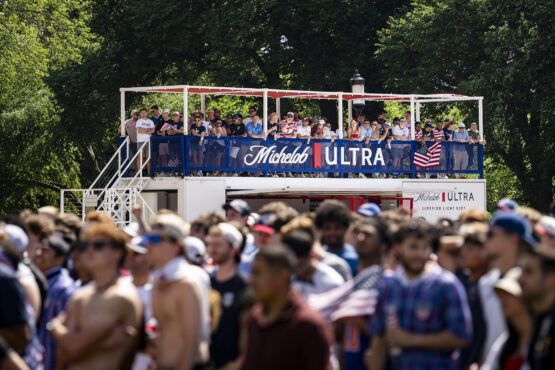
United States soccer fans watch the United States against Australia World Cup game from a Michelob Ultra pavilion in Washington on 19 June.
This year’s event is more appealing to TV advertisers than the previous one in Qatar because it takes place during primetime hours in North American timezones, according to Sean Muller, chief executive officer at iSpot.tv, a market research firm.
ADVERTISEMENT
CONTINUE READING BELOW
Read:
Bafana’s big win: A goal for soccer, a boost for business
South Africa beats Korea to qualify for World Cup knockout stage
World Cup exposes growing global prediction market rift
World Cup 2026’s dynamic pricing has tickets going one way: Up
“Each US match is going to garner insane ratings and amazing opportunities for brands to show their support for both soccer and the US,” Muller said.
Top advertisers so far include Hyundai Motor Group, which has also been promoting its Kia brand, Anheuser-Busch InBev’s Michelob Ultra, PepsiCo’s Lay’s potato chips and Home Depot Inc., according to iSpot.
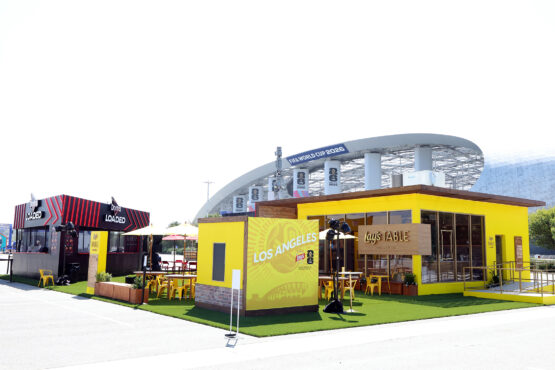
The Lay’s® and Doritos® immersive pop-ups at Los Angeles Stadium on 11 June.
Fox has made controversial use of the tournament’s hydration breaks for advertising, which may have opened up about 800 additional ad spots. The company could generate more in ad revenue than the $800 million it took in for last year’s Super Bowl, according to iSpot estimates.
The network, which paid $485 million for the US media rights to the tournament, declined to comment on the ad sales estimate. Both Fox and Telemundo have sold out their ad inventory.
Many of the brands advertising during the World Cup are pulling out all the stops for their commercials. About 75% of the ads star celebrities, while around 60% feature soccer legends, according to Graham McKenna, chief marketing officer of XR: Extreme Reach, an ad operations platform that handles payments to celebrities and athletes who appear in commercials.
ADVERTISEMENT:
CONTINUE READING BELOW
Brands have shelled out for commercials feature ensemble casts, following a popular trend in Super Bowl advertising. The Lay’s “bandwagon” campaign stars actor Will Ferrell, who drives a massive truck across America, collecting soccer fans, as well as soccer great David Beckham and former NFL player Marshawn Lynch along the way.
Another ad with a standout cast comes from clothing and shoe brand Adidas AG. Timothée Chalamet, an actor and avid sports fan, puts together a pickup soccer team made up of star players Jude Bellingham, Lamine Yamal and Trinity Rodman. The ad also features Lionel Messi, singer Bad Bunny and a crop of soccer legends generated by CGI.
Ensuring that it’s worth paying for pricey ad spots and shooting an expensive commercial stocked with stars can be tricky though, according to Ebiquity’s Harrison. Even using a hyped-up celebrity could backfire and read as inauthentic, she said.
“They can’t put a celebrity that has no affinity towards the sport and expect that the brand’s consumers are going to be engaged,” she said.
Harrison also pointed to the growing use of mobile phones and social media to watch game highlights, noting that leveraging a platform like TikTok might be just as important as investing in a TV ad.
“It’s going to make or break a successful campaign if brands take advantage of the non-broadcast interaction and exposure,” she said.
ADVERTISEMENT:
CONTINUE READING BELOW
Many advertisers have taken a multi-pronged approach to the World Cup. In addition to being an event sponsor, Unilever Plc has invested in a commercial for its Rexona and Dove Men+Care personal care brands, held in-person giveaways at matches for its limited-edition World Cup deodorants and partnered with Tori Penso, an American female World Cup referee, who will wear a whistle and cleats with the logo from Unilever’s Dove brand.
Unilever has also targeted social media by putting together House of Fresh, an invite-only event space catering to influencers.
A House of Fresh location in New York last week showcased the Dove Men+Care brand. Attendees could create custom soccer jerseys and pullovers with Dove branding, print a personalised soccer trading card with their face and make keychains complete with dove-shaped charms. Instagrammable spaces included a mini soccer pitch, a wall made out of soccer balls and an area for getting a professionally shot photo with a trophy. Athletes Rodman and Lynch participated in a panel that attendees could film on their phones.
Kathryn Fernandez, a Dove marketing executive in the US, said the company’s investment in influencers and social media is critical with an event this big.
“It helps us reinforce with our traditional messaging,” she said. “What it does is really make those authentic connections when you’re scrolling.”
© 2026 Bloomberg
#Unilever #Pepsi #tap #celebrities #players #World #Cup