The Nasdaq is headed for its worst weekly loss in more than a year, and the S&P 500 is on track for a fifth consecutive drop.
Similarly, after making history with the largest IPO ever, SpaceX stock has tumbled, and bonds it sold days ago are already sinking.
It wasn’t supposed to be like this. With the U.S. and Iran finally ending hostilities, the path looked clear for the AI boom to reach even greater heights as oil prices and bond yields fell.
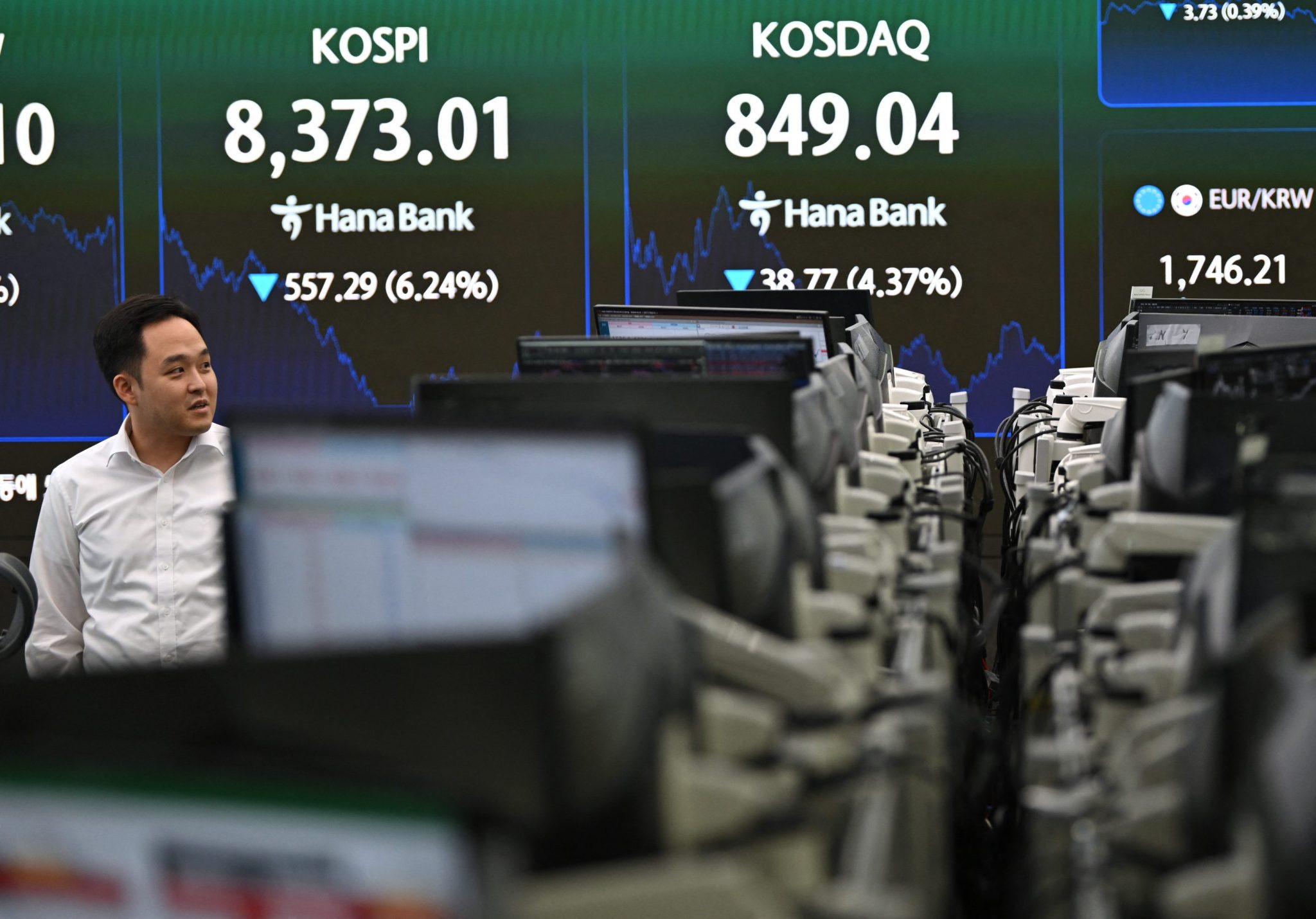
In fact, South Korea’s high-flying Kospi stock index, which is dominated by AI darlings SK Hynix, and Samsung, set a new record just last week.
Since then, it’s crashed 10% and saw its fifth worst daily plunge on Tuesday, sparked by SK Hynix’s comments that it planned to slow down its AI memory business. Global stock indexes followed.
For analysts at Capital Economics, the volatility was especially worrisome, pointing out that such selloffs have previously only happened during bear markets like during the Asian financial crisis, the dot-com bubble, and the Great Financial Crisis.
“This volatility is, in our view, evidence of excessive froth and calls into the question the sustainability of this rally,” James Reilly, senior markets economist, wrote.
The fact that stocks around the world tumbled because of news from one Korean firm highlights how important semiconductors stocks have become, he added.
Indeed, chips “have been the only game in town,” with their returns far outstripping even those of other AI-related stocks.
“If the new market leaders, semiconductor firms, also start to struggle, the stock market would be in big trouble,” Reilly said.
Strong earnings and guidance from chipmaker Micron on Wednesday appeared to put doubts about the AI rally at ease. But even that wasn’t enough.
Apple’s price hikes due to chip shortages and a report OpenAI may delay its IPO to 2027 put stocks in a tailspin again. Expectations the Federal Reserve will hike rates soon haven’t helped either.
“The AI rally may be approaching its final stages,” Capital Economics declared in a follow-up note on Thursday, adding that the “equity bubble close to bursting.”
While robust earnings have sustained the AI boom—unlike the dot-com bubble that saw unprofitable startups soar—investors’ expectations for future earnings are getting unrealistic, it warned.
For now, a “blow-off phase” should deliver more upside before the party is finally over. Capital Economics predicted the S&P 500 would end 2026 at 8,250, up 12% from Friday’s levels—then collapse 21% to 6,500 by the end of 2027.
Others on Wall Street see evidence elsewhere of a bubble, especially in the scramble to raise money via big equity and bond deals.
Even before SpaceX’s historic IPO, Google parent Alphabet netted nearly $85 billion proceeds earlier this month from a secondary stock offering. AI chip leader Nvidia raised $25 billion in its first debt sale since the AI boom began.
But SpaceX’s $85.7 billion in IPO proceeds, followed days later by a $25 billion bond offering, is an example of “a healthy boom, a stretched boom?.?.?.?into bubble territory,” Ludovic Subran, chief investment officer at Allianz, said at an industry conference this week.
“The guy just got $70 billion of funny money to play with to get us to space,” he said, according to the Financial Times. “Of course, bond investors are not the same as equity investors. Equity investors, you can take them to Mars. Bond investors are, like, ‘where is my coupon?’”
Even a mostly bullish outlook from JPMorgan this week came with a “flash crash” warning. On Wednesday, analysts raised their year-end S&P 500 target to 7,800 from 7,600, citing strong earnings estimates.
The forecast assumes the Fed holds rate steady this year, then raises next year, while the market’s top gainers will remain highly concentrated in AI stocks.
“That said, the path higher is likely to be non-linear given a tougher bar into 2Q earnings, crowded Momentum positioning (especially Low- Quality and Speculative Growth segments) that continues to face high probability of a flash-crash, rapidly increasing equity supply, and potentially tighter monetary policy that could constrain equity multiples,” JPMorgan wrote.
#boom #legs #surge #blowoff #phase #bubble #pops