Tesla’s (TSLA) latest federal safety probe isn’t a routine crash investigation.
It’s a test of one of the greatest assumptions still baked into Tesla’s stock: that the company can turn driver-assistance software into a business considerably more valuable than regular car sales.
For years, Tesla has been pushing investors to evaluate it as more than an electric-vehicle producer. CEO Elon Musk has built the company’s future on artificial intelligence, software, robotaxis and Full Self-Driving.
That makes every safety question involving Tesla’s driver-assistance technologies larger than a compliance issue.
The matter has now been sent to federal regulators after a deadly crash in Katy, Texas, on June 19, involving a Tesla Model 3. A car plowed into a residence, killing a 76-year-old woman inside, Reuters said. The driver told local officials that the driver-assistance system was engaged, but Tesla’s self-driving chief said the driver manually overrode the system.
What happened in Texas is the legal question.
But there’s also an investor question: How much of Tesla’s valuation can remain predicated on autonomy while regulators are still asking tough questions?
“In this case, the driver manually overrode self-driving,” Tesla self-driving chief Ashok Elluswamy said on X.
Tesla’s valuation depends on more than electric vehicles
Tesla trades differently than Ford (F), General Motors (GM) and most other auto manufacturers.
That’s what the bull case has always been. Traditional automakers are often valued on deliveries, profits, incentives, labor expenses and the health of the consumer. Tesla has been priced for something bigger: the chance that it becomes a dominant technological platform.
That platform tale has some pieces.
Tesla sells electric vehicles, batteries, energy storage products and charging access. Software is the dream of higher margin. If Tesla can make Full Self-Driving a widely adopted subscription product and eventually a robotaxi network, the economics of the company could start to look less like Detroit and more like a tech-infrastructure business.
This is why the Texas catastrophe matters for investors this week.
Related: Tesla headed for its biggest fight in Europe yet
A regular automaker can have a safety probe and still maintain the larger valuation thesis. Tesla’s dilemma is more complicated because driver-assistance examination involves the same technology that underpins part of its market premium.
That doesn’t mean Tesla’s systems caused the crash. NHTSA has not found that to be the case, and Tesla has publicly rejected the notion that its automation was to blame.
But the market doesn’t just trade on the final regulatory findings.
It’s a game of confidence, a game of risk, and a story of durable future earnings. Each fresh probe into Autopilot or Full Self-Driving is another reason for investors to question whether Tesla’s autonomy timetable is too rosy.
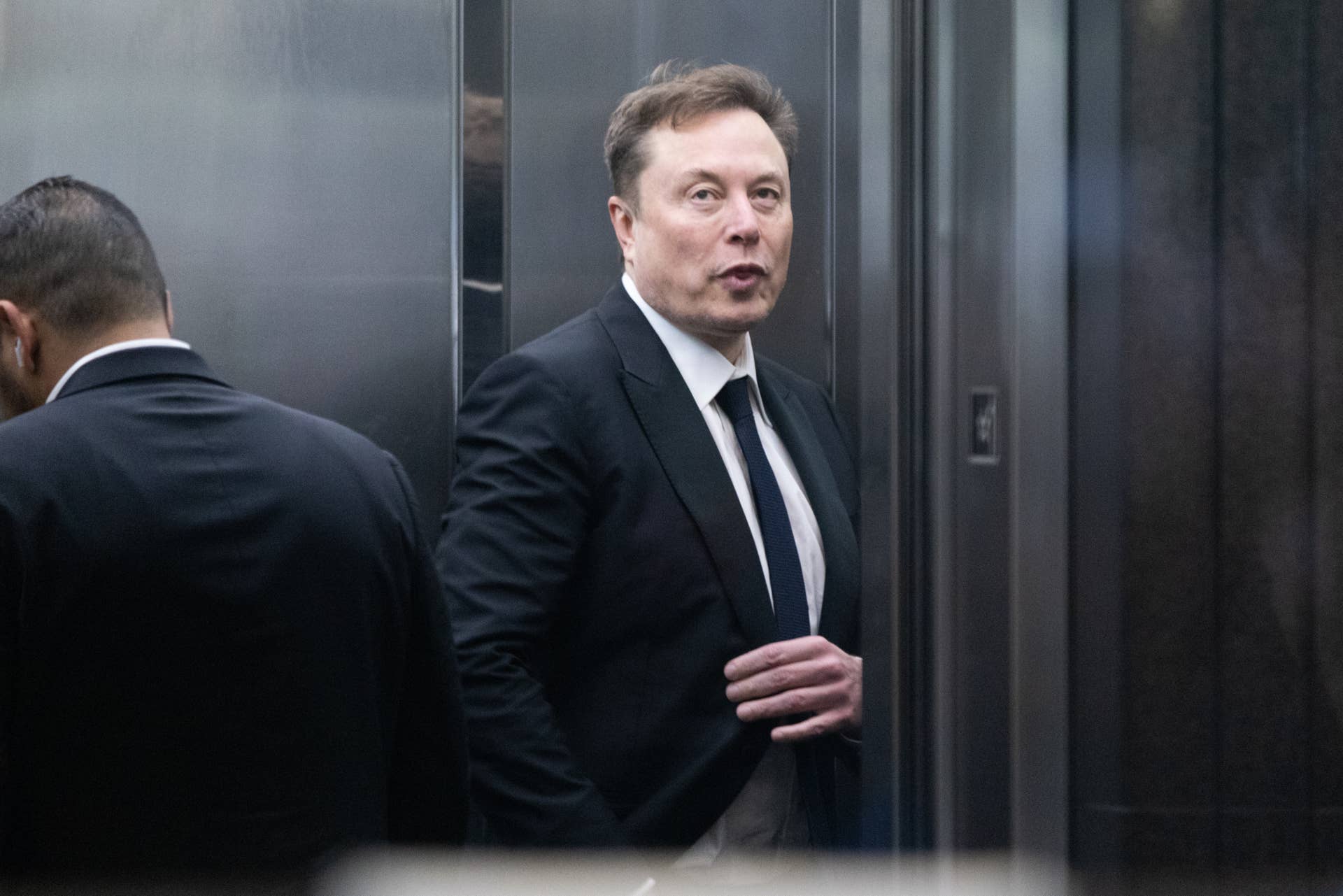
Benjamin Fanjoy / Getty Images
Tesla crash probe keeps an old risk alive
The National Highway Traffic Safety Administration started a special crash investigation into the June 19 incident, Reuters said. A Tesla Model 3 crashed into a home in Katy, Texas, killing a lady inside.
The facts are still contested.
The Harris County Sheriff’s Office said the driver reported that he was operating the vehicle “with an automated driving assistance system engaged at the time of the crash,” according to Reuters. The story of Tesla is different. At the time of collision, the driver was “floor-gunning” the car at 73 mph and kept the accelerator mashed down long after the crash, Elluswamy added.
More Automotive:
- Car owners caught in government fight that could cost them big
- Ford begins testing tech that will change Americans’ minds about EVs
- Edmunds sees major shift on used car prices
Musk reportedly disputed reports of the incident, stating Tesla’s Full Self-Driving system “drives slowly through neighborhood streets,” Reuters said.
The dispute is fundamental to the legal and regulatory process. That is less reassuring to investors.
For some time, Tesla has been under investigation for the performance of its driver-assistance systems and how drivers use them. Since 2016, NHTSA has started roughly 50 special crash investigations investigating events involving Tesla vehicles where systems such as Autopilot were suspected of being deployed, with about two dozen deaths reported, according to Reuters.
The regulator also has expanded an investigation into 3.2 million Teslas with Full Self-Driving over fears the system may not identify or warn drivers in poor visibility. Reuters also said that the NHTSA has launched a separate investigation into 2.88 million Tesla vehicles with Full Self-Driving following more than 50 reports of traffic safety infractions and a series of crashes.
And that larger history is what lends the latest probe import.
Investors are not just looking at one accident. They’re looking to see if Tesla’s boldest growth story can pass a long-standing regulatory credibility test.
Tesla investors should watch the autonomy discount
The next big challenge for Tesla investors may not be NHTSA’s ability to reach a timely resolution.
It might be when Wall Street begins to price in Tesla’s self-driving ambitions more aggressively.
It’s difficult to quantify that risk because Tesla’s valuation is not only based on current profitability. The stock’s appeal has largely rested on the idea that Tesla can establish future revenue streams that traditional manufacturers couldn’t readily imitate.
Full Self-Driving is part and parcel of that discussion.
If Tesla can establish the system is secure, scalable and regulator-friendly, the business might eventually achieve recurring software income and robotaxi economics. The period might lengthen out if authorities require more adjustments, drivers lose confidence or legal exposure develops.
That could work.
A longer timescale doesn’t kill the autonomy bull argument, but it may make investors less eager to pay for it upfront.
Tesla has a history with the fallout of driver-monitoring concerns. The company recalled 2 million vehicles in 2023, virtually all of its EVs on U.S. roads, to better ensure drivers pay attention using Autopilot, Reuters said.
Three signals retail investors should watch for from here
The first is whether NHTSA will keep its focus restricted on the Texas study or utilize it to pose larger concerns regarding Full Self-Driving behavior in residential neighborhoods.
Key takeaways for Tesla investors
- Tesla faces a new NHTSA probe after a fatal Model 3 crash in Katy, Texas.
- The driver reportedly told local officials that automated driver assistance was engaged.
- Tesla says the driver manually overrode the system by fully pressing the accelerator.
- The crash adds to years of federal scrutiny around Autopilot and Full Self-Driving.
- The investor risk is not only one crash, but pressure on Tesla’s autonomy premium.
- Investors should watch for regulatory expansion, software changes and analyst valuation shifts.
The other is a change by Tesla in how it describes or markets its driver-assistance technology.
Third is whether analysts start to more aggressively separate Tesla’s EV business from its autonomous story in their value models.
That’s where the stock risk comes in.
Tesla investors still need proof on self-driving
Tesla’s latest federal examination includes more than a single crash headline.
It strikes at the aspect of Tesla’s story that differentiates it from the rest of the auto industry.
The firm may still say the Texas crash was caused by driver behavior. Regulators may eventually agree. But investors will have to be cautious about this one discovery, because Tesla’s price rests on future faith in its driver-assistance technology.
That confidence is tenuous.
Tesla wants investors to believe that Full Self-Driving can eventually be a high-margin platform, not just a vehicle option. That’s why the company deserves more credit than legacy automakers for potential industries that are still in their infancy.
But the same story produces risk.
Every new collision probe into driver-assistance technology gives regulators, consumers and analysts another reason to temper the expectations baked into Tesla’s stock.
That’s why individual investors should worry this week.
Tesla’s delivery figures won’t change today, but the Texas probe may. It may not even show that the technique did not work. But it keeps the market’s eye on whether Tesla’s self-driving future is coming fast enough and safely enough to warrant the premium investors have already paid for it.
For Tesla, autonomy remains the opportunity.
It’s also become the credibility test.
Related: Tesla stock has a SpaceX problem, veteran analyst says
#fatal #crash #threatens #Teslas #stock