Americans ages 50 and up filed nearly half of the fraud reports received by the Federal Trade Commission last year. But despite losing money less frequently than younger age groups, a Nifty50+ analysis of FTC data revealed that their financial losses were 35% higher. That finding underscores the importance of knowing which scams pose the biggest threats and understanding the factors that increase your risk.
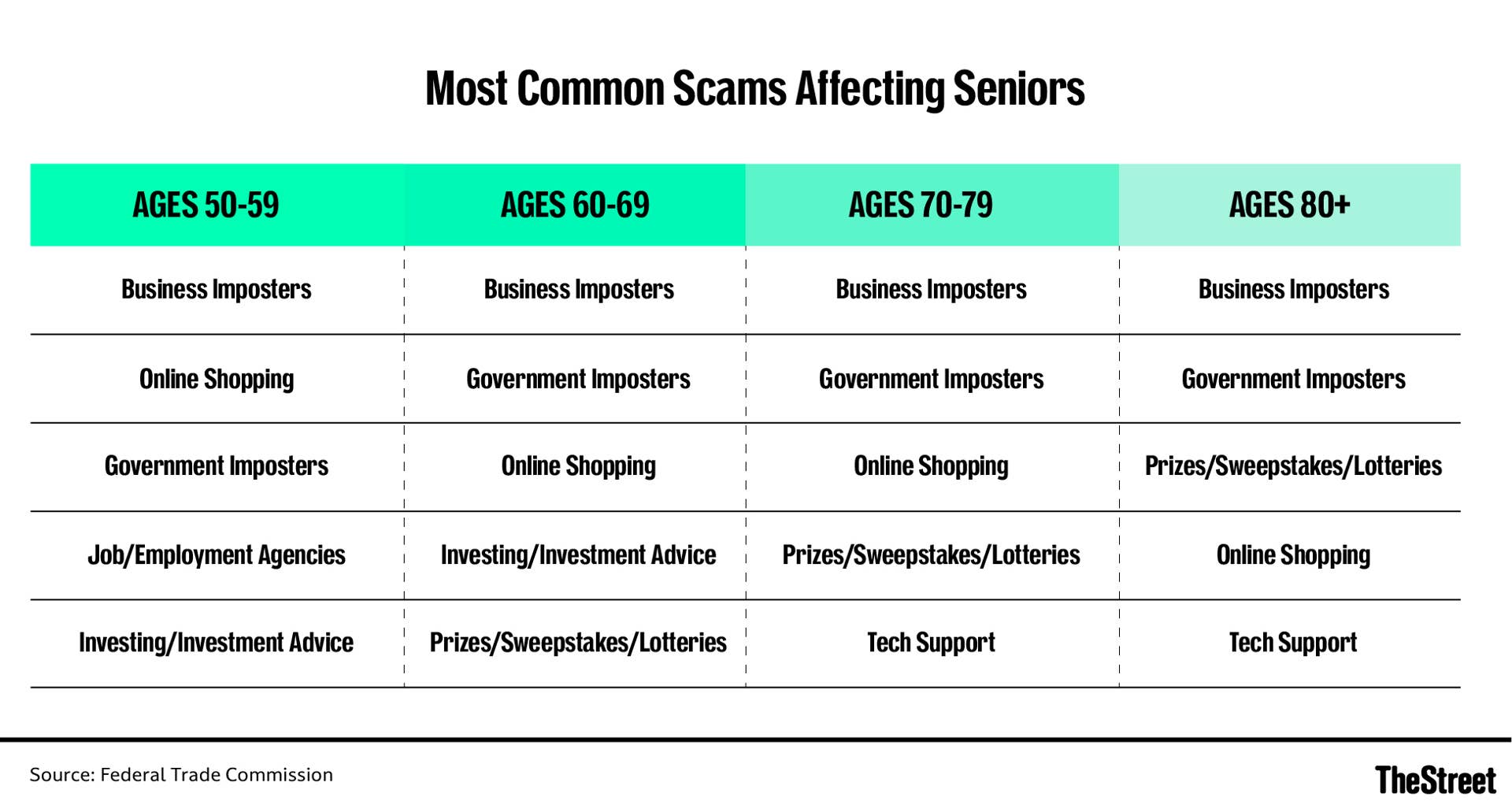
Most Common Scams Affecting Seniors
Scams involving business imposters are the most common type affecting people 50 and older. Otherwise, the top 5 vary somewhat between age groups, as the following table shows.
Different types of Scams
Watch for this bank account scam
Avoid these travel scams
Get info on what is called a ‘Brushing Scam’
Learn the signs of a romance scam
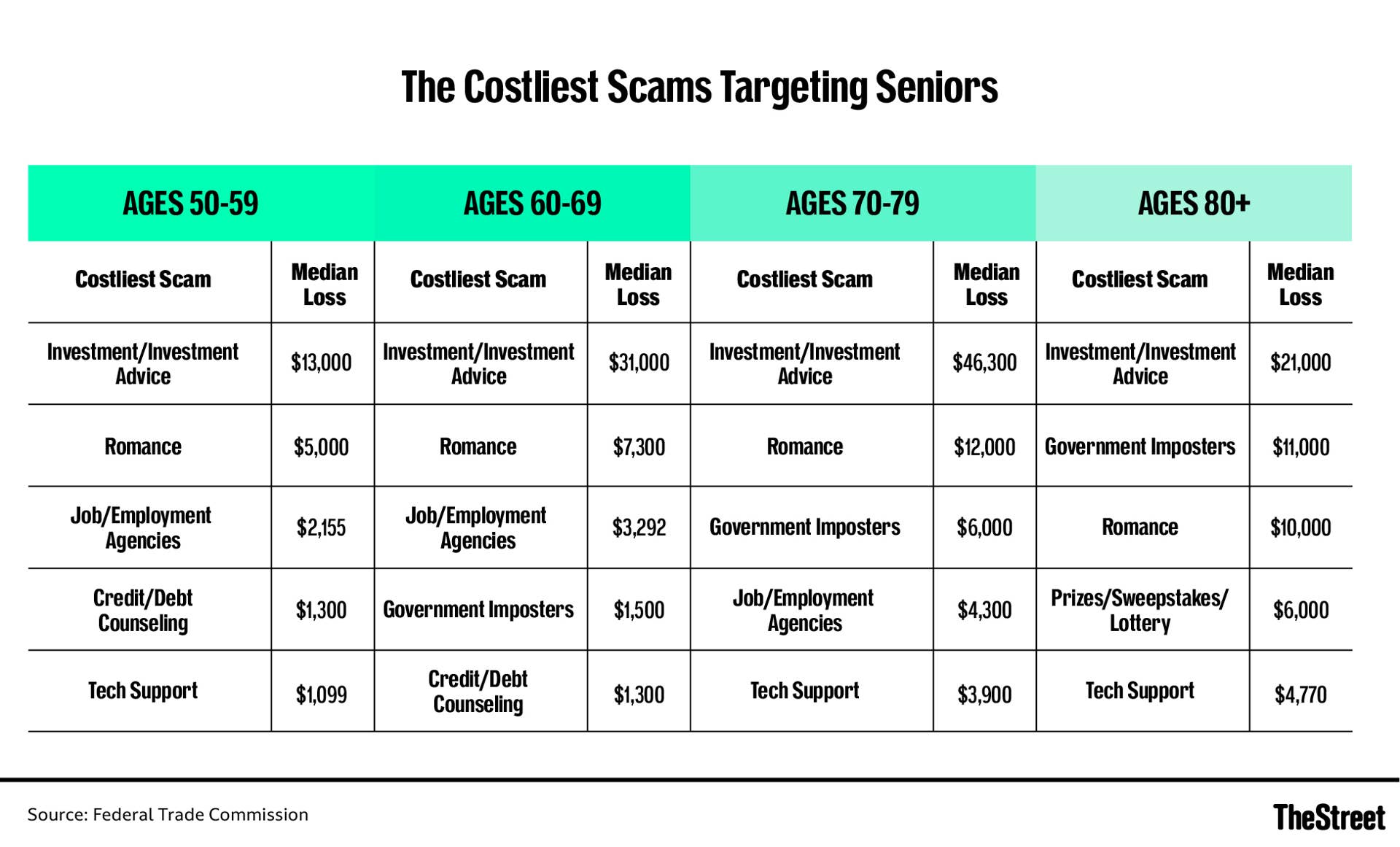
The Costliest Scams Targeting Seniors
The costliest scams by far are fraudulent investments and investment advice, which is no surprise given older Americans’ high average net worth, according to Fidelity. Potential for loneliness increases seniors’ vulnerability for the second-costliest fraud – romance scams.
Here’s a closer look at the scams resulting in the highest losses for each age group, along with the median dollar losses for each. While some occur much less frequently than the most-common scams, the steep financial hits could be catastrophic for people nearing or living in retirement.
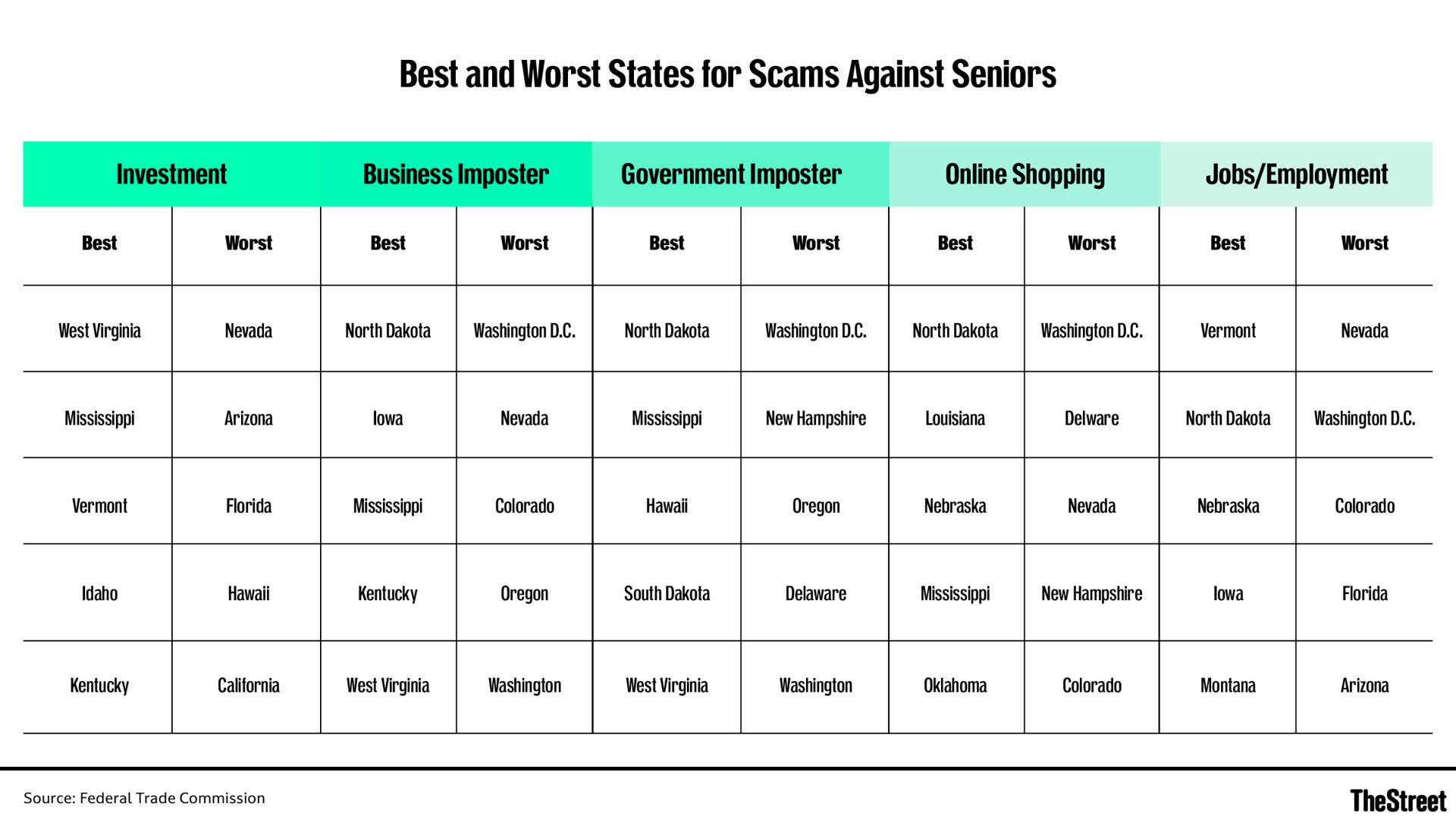
Best and Worst States for Scams Against Seniors
Your scam risk varies by state, with North Dakota being the safest (or “best”) state for scams and Washington, D.C., being the riskiest (or “worst”). However, the best and worst states vary by scam type. The following table shows the most common scams targeting people ages 50 and up, and in which states they’re most and least prevalent:
How To Identify a Scam
Scams have common red flags, according to the FBI. They often begin with an unsolicited email, call or text, for example, and create a sense of urgency for the victim to pay or send money to avoid a serious consequence. The FBI recommends ignoring such communications. If you respond in error, cut them off. The longer you communicate, the more likely you are to be swindled.
#FTC #survey #Older #Americans #hammered #scams