Regardless of a ceasefire deal that reopens the Strait of Hormuz, Iran’s demonstrated ability to shut it down will continue to hang over the global economy, rendering the narrow waterway a contested space.
But while the U.S. has failed to restore freedom of navigation in the strait, a steady drumbeat of messaging recently suggests an effort to dilute Tehran’s new leverage.
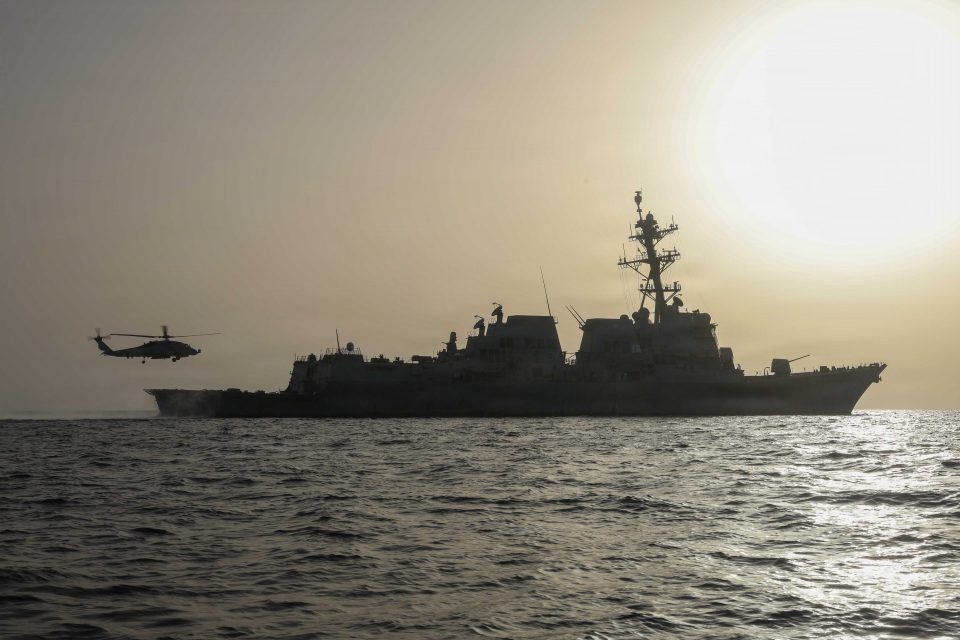
Starting late last month, U.S. officials began revealing that more ships had been quietly crossing the strait with U.S. assistance through a route along the Omani coast. Subsequent reports pointed to a more robust U.S. role as “naval overwatch” offered protection from Iranian attacks.
The traffic uptick still represented just a fraction of pre-war levels, but it gave oil markets more breathing room before inventories reach critical levels while providing the U.S. additional leeway in negotiations with Iran.
On Tuesday, Energy Secretary Chris Wright admitted in congressional testimony that traffic in the strait was rising “very meaningfully” in a military operation that wasn’t being disclosed openly.
Then on Wednesday, President Donald Trump described a “secret mission” that he claimed had put more than 100 million barrels of oil on the market, or about five day’s worth of shipments before the war started.
“I can say it now. Something you didn’t know,” he said. “Do you know we’ve been taking out millions of barrels of oil? Nobody knows it. You know who doesn’t know about it? Iran — until right now.”
On Thursday, U.S. Central Command posted a message saying the Strait of Hormuz is open for transit, touting routes for safe passage, the hundreds of ships that have already crossed, and forces in place to defend against attacks.
“Iran does not control the Strait of Hormuz,” it added.
Interior Secretary Doug Burgum added to the chorus on Friday, when he said more than 20 ships exit the Persian Gulf on some nights under the cover of darkness with help from U.S. forces.
And for good measure, Defense Secretary Pete Hegseth told CBS News on Sunday that the U.S. naval blockage in Iran is “impenetrable” and 125 million barrels of oil have now exited the Gulf, “showing that we control the strait.”
U.S. Navy
Meanwhile, Iran established a separate channel through the strait that runs along its coast, demanding tolls from ships that want to cross and attacking any that try to skirt it.
As a result, U.S. forces and Iran’s Islamic Revolutionary Guard Corps continue to exchange fire on a regular basis as both sides maintain competing lanes.
U.S. aircraft have bombed Iranian missile sites and destroyed fast-attack boats, while the IRGC launches drones at commercial ships and even downed an Apache attack helicopter, forcing the crew to be rescued from the water.
With protection from the U.S. military, tankers are crossing the strait from the Persian Gulf into the Gulf of Oman, where they offload their oil via ship-to-ship transfers—borrowing a tactic that the Iranian and Russian “shadow fleet” have used for years to avoid Western sanctions.
After the transfers, the newly loaded ships take their oil to customers around the world, while the empty tankers cross back into the Persian Gulf to full up on more crude supplies.
This has allowed Kuwait, which has no meaningful routes to export oil other than the Strait of Hormuz, to finally draw down its inventories that had built up during the closure.
In fact, Kuwait began offering to sell its crude to refiners in Asia on Tuesday, marking the first time since the Iran war started.
The United Arab Emirates, which has used a pipeline to get some supplies around the strait, has also been selling oil from inside the Persian Gulf to customers in Asia.
But Kuwait’s shipments are especially notable as they originate from deep inside the Gulf, meaning tankers must first travel while exposed to much of Iran’s coast before even reaching the strait.
U.S. Navy
#Iran #proved #close #Strait #Hormuz #U.S #showing #punch #open #hole