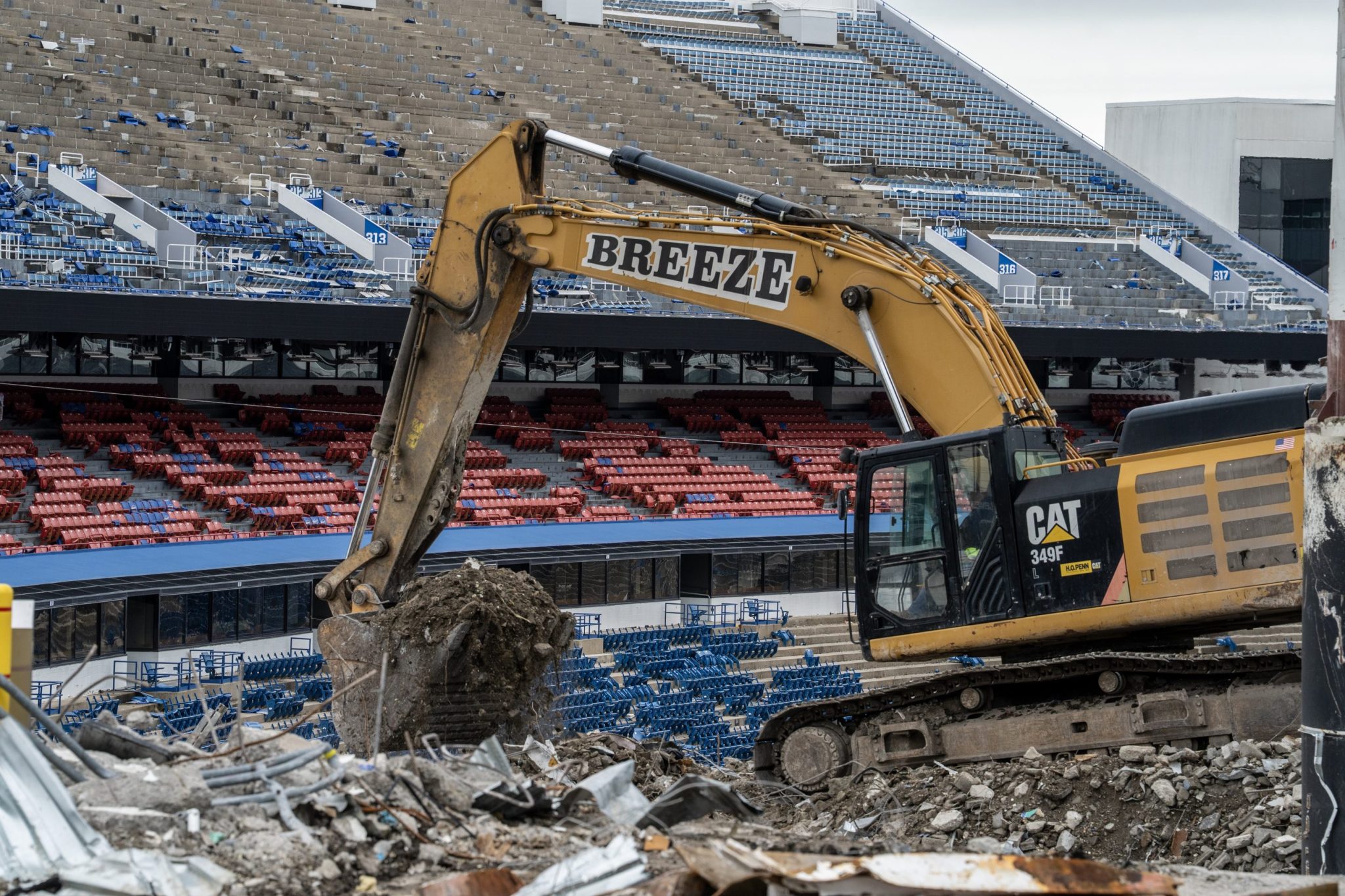
When the Buffalo Bills open their $2.2 billion Highmark Stadium this September, they’ll be opening the NFL’s smallest venue: 60,108 seats, down from the 71,608 the old stadium held. And to make that happen, New York State and Erie County paid $850 million in public funds, resulting in 11,500 fewer seats, with personal seat licenses (the mechanism allowing holders the right to buy season tickets) running as high as $50,000 per seat. Get-in prices on opening night have already listed at $663 on the resale market.
The stadium was built, in significant part, with the money of the fans being priced out of it. New York State contributed $600 million; Erie County contributed $250 million, which collectively is the largest public subsidy ever committed to an NFL facility. But the Bills Mafia’s new stadium isn’t unique in this funding: In deal after deal across American sports, it’s the same playbook in which the public funds a venue, and the owner uses it to serve a wealthier, smaller crowd.
‘Market rates’ to blame
On the first day the FIFA World Cup opened, FIFA President Gianni Infantino held a press conference in Mexico City and offered this defense of his tournament’s sky-high ticket prices: “If we are doing something wrong, everyone in North America is doing something wrong.” It was his more forward argument following his comments at the Milken conference in April, in which he blamed the U.S. market’s design for encouraging these exorbitant prices. “We have to look at the market—we are in the market in which entertainment is the most developed in the world, so we have to apply market rates.”
Between 1970 and 2020, state and local governments spent $33 billion in public funds on major-league sports arenas across the U.S. and Canada—with the median public contribution covering 73% of construction costs. That number has only accelerated: In 2024 alone, more than $13 billion in taxpayer subsidies were proposed by teams across professional sports for new construction and renovations.
“No one has ever built a new stadium and provided more affordable tickets after that new stadium has opened,” said Victor Matheson, a professor of economics at the College of the Holy Cross who has studied sports subsidies for nearly 30 years. “It’s, in fact, exactly the opposite.”
The shrinking stadium
Individual teams in most leagues don’t have to share revenue from premium seats and luxury boxes with the rest of their league—while TV and merchandise revenue is pooled. That incentive pushes every owner in the same direction: Rip out the cheap seats, build suites, constrain supply, and extract maximum value from the fans with the deepest pockets.
Average NFL ticket prices nearly tripled from 2015 to 2025, up 173% after adjusting for inflation. The new Chiefs stadium is expected to have roughly 15% fewer seats than Arrowhead. New stadiums across the NFL, NBA, and MLB consistently follow the same pattern: fewer general seats, more luxury suites, higher prices throughout.
“The money is in super premium experiences, not in actually putting people in the seats,” Matheson told Fortune. “The old model was: Build an 85,000-seat stadium and sell cheap bleacher tickets and hopefully they buy some peanuts and Cracker Jack. That’s not the way anyone sells things anymore.”
“We make stadiums and arenas smaller, but we make them nicer,” Matheson continued. “You tear out a bunch of bleacher seats, and you put in a box with a handful of seats but a super-premium experience, because you can make a lot more money on a few seats to the right people than a lot of seats to the working class.”
The incentive structure reinforces itself: Teams don’t have to share premium revenue with the league, making it the one revenue stream they can maximize entirely on their own terms.
FIFA raised prices on more than 90 of the 104 World Cup matches between October 2025 and April 2026, with the three main ticket categories rising an average of 34%. FIFA claims it received 500 million requests for the 7 million World Cup tickets on offer. Infantino offered 130,000 tickets at $60—out of a total of six to seven million—and called it the “right thing to do.” The Football Supporters Europe coalition filed a formal complaint accusing FIFA of abusing its monopoly position. The New York and New Jersey attorneys general subpoenaed FIFA over alleged seat-location misrepresentation and artificial price inflation.
Taxpayer dollars at auction
The stadium subsidy race has a direct parallel in the broader economy in terms of cities competing with each other using public money to offer companies better tax incentives and bring their businesses there.
In 2018, Amazon solicited bids from 238 cities for its second headquarters. New Jersey offered $7 billion if Amazon located in Newark. Maryland pledged $8.5 billion. New York ultimately offered $3.5 billion in tax incentives—less than half of Newark’s package, yet Amazon still chose New York. Amazon executives said the decision was based primarily on where employees wanted to live, not on incentives, meaning Newark’s $7 billion was never really in the running, and eventually, New York pulled out of the deal due to community opposition.
Economists say these cities, already with the structural advantages to win regardless, are essentially throwing money into the void because these companies and stadium owners were always going to pick them. Buffalo was never realistically going to lose the Bills. The $850 million was, in effect, a ransom paid to prevent a departure that was never truly on the table.
We’re seeing an auction play out with data centers. States have been offering hundreds of millions in tax breaks to attract the AI infrastructure boom, and the costs are exploding beyond any projection. Ohio’s data center tax exemption, initially projected to cost $136 million in fiscal 2025, came in at nearly $1.6 billion—more than 11 times the estimate. The state has since suspended the program. Illinois followed, with Gov. JB Pritzker pausing data center tax incentives after the legislature failed to make facilities pay for their own electricity costs, arguing as one of many voices in the debate that the buildings bring few jobs relative to their footprint, consume enormous power and water, and face growing community opposition.
A hidden market problem
Judd Kessler, a professor of business economics at the Wharton School and author of Lucky by Design, said the stadium subsidy dynamic is a hidden market failure at the structural level. When public money builds a venue that an owner then deliberately constrains and ups the amenities and premiums, the taxpayer is funding the creation of a scarcity they will personally be priced out of. When venues price below what the full market would bear, the surplus moves sideways into bots, queues, and resale platforms. And when there, between 25 and 35% gets extracted in fees on every transaction.
“We as customers and fans should look at those fees and be annoyed by them,” Kessler told Fortune, “the same way—potentially even more so—than we are annoyed by very high initial ticket prices.” That fee structure was central to the Ticketmaster-Live Nation antitrust case, in which a jury ruled in April that Live Nation held an illegal monopoly over the live events industry. It’s one reason, Kessler argues, innovation in ticket market design has stalled: too many players in the system profit from the opacity.
The pattern surfaced in sharp relief at Madison Square Garden this week. Mayor Zohran Mamdani paid close to $1,000 for a standing-room-only ticket to Game 3 of the NBA Finals while simultaneously announcing a free watch party for 5,000 fans at Bryant Park who couldn’t afford to attend. The same dynamic played out in Central Park on Monday, where the state of New York spent $6 million to host a free watch party for 50,000 residents who cannot afford a World Cup ticket at MetLife Stadium less than 10 miles away across the river.
The return that never comes
Every new stadium deal is sold with some version of the same promise: jobs, tourism, civic pride, economic revitalization. The economic literature is nearly unanimous that those promises don’t materialize. A 2017 survey found 80% of economists believe the costs of stadium subsidies outweigh the benefits.
“This profit-maximizing concept, when you’re simultaneously asking for handouts from regular taxpayers, is appalling,” Matheson said. “Asking blue-collar workers to pay higher taxes so the wealthy and upper-middle class can go see games in shiny new stadiums is absolutely one of the worst pieces of public policy out there.”
#American #taxpayers #spent #billion #sports #stadiums #seatsand #higher #prices