Peace deals tend to be very good for gas prices. Markets sell off, traders unwind risk hedges, and within weeks the cost of filling a tank drifts back toward whatever was normal before the bombs started falling. That has been the muscle memory of every oil shock since the 1991 Gulf War, and it is the muscle memory traders are leaning on right now.
The shaky US-Iran ceasefire has held over a while. Brent crude has backed off the $100 line. US stocks are again flirting with all-time highs. And the average price of regular gasoline in America, while still well above $4 a gallon, has at least stopped climbing for the first time in two months.
Plenty of pundits have read those tea leaves and declared the worst is over. But the cleanest pump-price relief in a generation may not actually arrive, even if Donald Trump walks Tehran into a signing room.
That is the warning a top energy adviser, one of the most consistent voices in Washington oil-policy circles, is now sending Wall Street, and the math behind it has direct consequences for every American household tank.
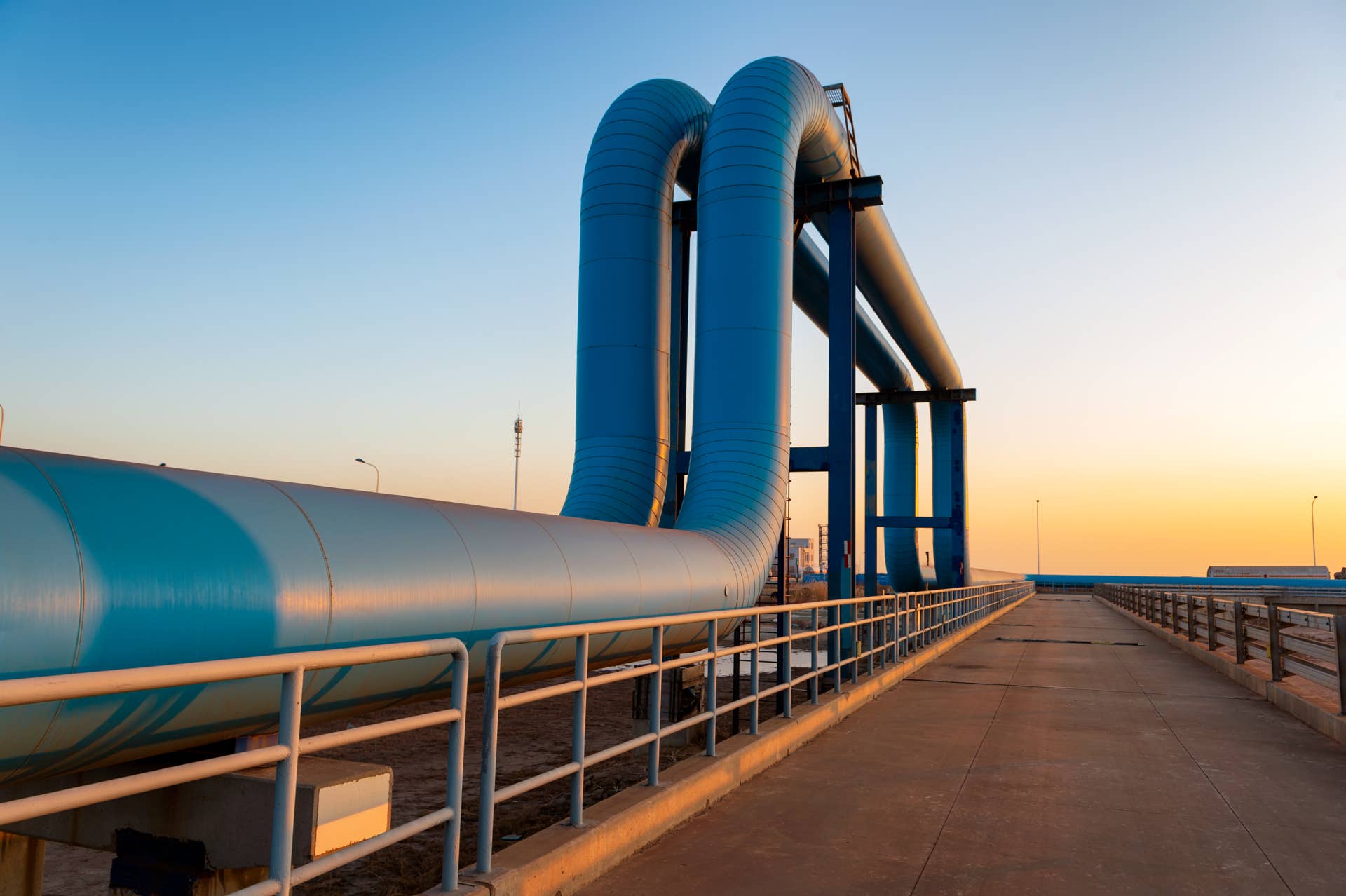
wenbin / Getty Images
Why the Strait of Hormuz still controls your gas bill
About one in five barrels of oil traded globally passes through a single 21-mile-wide chokepoint between Iran and Oman, the Strait of Hormuz. That number has been the headline statistic of the war since late February, when the US and Israel launched airstrikes that pushed Iran to close the channel to Western-aligned tankers.
More Oil and Gas:
- Early Chevron stock investors now earn 12.1% dividend yield
- Chevron, Shell ink more surprising Venezuela deals
- AAA gas prices reveal a new trend for Americans
The closure has pulled more than 1.2 billion barrels of crude out of global markets since the start of the war, according to S&P Global Commodity Insights. Gulf producers including Saudi Arabia and the United Arab Emirates have cut output by roughly 6%, with no quick workaround at that scale.
That is the pipe Wall Street keeps trying to price around. It is also the pipe American drivers cannot route around when they pull into a Shell, Exxon Mobil (XOM), or Marathon Petroleum (MPC) station on their commute home.
I have been tracking the Energy Information Administration’s revised forecasts each month, and the May update was the bluntest yet. The agency now projects retail gasoline will average $3.88 a gallon for 2026 and $3.62 for 2027, sharply above its pre-war February calls of $2.91 and $2.93, according to the Short-Term Energy Outlook.
Related: UBS sounds alarm on oil price for the rest of 2026
What’s changed in three months
- US average gas price went from $2.98 on Feb. 23 to $4.55 on May 22, according to AAA.
- Brent crude is up roughly 44% from pre-war levels to about $105 a barrel, according to CBS News.
- Strait of Hormuz traffic has fallen to roughly 5% of normal volume, according to base-case modeling by Goldman Sachs (GS)
- The 2026 EIA gasoline forecast climbed to $3.88, up from $2.91 before the war, per the Energy Information Administration.
What Bob McNally is telling Wall Street to expect
Bob McNally is not the most famous oil analyst on cable television, but inside Washington he is the one West Wing staffers tend to call when the Middle East is on fire. He ran energy policy under President George W. Bush, founded the consultancy Rapidan Energy Group in 2009, and now spends his days reading tanker traffic, Tehran statements, and Persian Gulf satellite imagery for institutional clients.
His current forecast is not the one the relief rally wants to hear.
“Even in the best case, a fundamental tightening of the market is baked in the cake,” McNally said in a phone interview, according to CNN. “There is this brutal, inexorable math that can’t be changed by a deal.” He still expects Brent crude futures to revisit $120 or even $130 a barrel, with US gas prices flirting again with the all-time high of $5.02 set in June 2022, per CNN.
Rapidan’s own probability table is even bleaker. The firm puts the odds of a near-term deal that actually reopens the Strait of Hormuz at just 10%, with a 70% chance of renewed hostilities over the next four to six weeks, according to CNN.
He is not alone in that read. Patrick De Haan, head of petroleum analysis at GasBuddy, has made the same point in plainer language to drivers, telling CNBC that “for pre-war prices to show up, it could take beyond a year.” Sultan Al Jaber, the chief executive of Abu Dhabi state oil company ADNOC, said last week that even an immediate end to the conflict still means waiting at least four months to restore 80% of pre-war flows through the strait, with full recovery unlikely until the first half of 2027, per CNN.
What a war-era gas tab actually costs your household
When I run the math against the real hit to household budgets, the picture is starker than the politics. JPMorgan’s commodity research desk estimated that if current gas prices hold through the rest of the year, they will pull roughly $100 billion out of US consumer purchasing power, with every 10-cent rise at the pump adding more than $12 billion to annual gasoline outlays, according to CBS News.
That is roughly the cost of the entire annual federal Pell Grant program. It is more than the full one-year value of the Republican-backed 2025 tax bill’s expanded standard deduction benefit for the bottom 40% of US earners. Translated into a single household budget, a family running two cars and filling up weekly is spending roughly $80 more per month than it was the day before the war started, based on my AAA-derived math.
That kind of squeeze does not always show up in macro headlines. It shows up as a thinner grocery cart, a delayed car repair, a skipped 401(k) match, a Thanksgiving flight home that does not get booked.
Watch the strait, not the headlines
The smart-money trade right now is not predicting whether Trump and Iran sign a piece of paper in Doha or Islamabad next month. The smart-money trade is watching the tanker count moving through the Strait of Hormuz. As long as that count sits at roughly 5% of normal, the math McNally is describing holds, regardless of which press release comes out of Washington next.
For drivers, the cleanest takeaway is also the most uncomfortable. Even a fully signed Iran deal cannot replace 1.2 billion missing barrels overnight. The price shock that began on Feb. 28 has already been engineered into 2027 retail forecasts at the EIA, into Wall Street’s base-case oil decks, and into every household budget that swipes a debit card at a pump.
The next Iran headline may calm Brent crude. It will not refill the strait. And until tankers are moving again, the analyst worth your trust is the one with the dullest, gloomiest math on the page, not the one delivering the most optimistic press hit on cable.
Related: Iran and Oman reveals shocking plan for Strait of Hormuz and oil
#Top #analyst #sounds #alarm #gas #prices #Iran #deal