Another retail company is moving fully online as geopolitical uncertainty in the Middle East and sweeping changes across the global retail industry continue reshaping consumer behavior and spending patterns.
The closure highlights the growing pressure facing traditional retailers in an era increasingly dominated by e-commerce, rising operating costs, and rapidly evolving consumer expectations. As consumers prioritize convenience, competitive pricing, and faster delivery, many retailers are struggling to justify the high costs associated with maintaining large physical storefronts.
Even highly innovative retail concepts are proving vulnerable. Despite building one of the region’s most immersive shopping destinations, this company is becoming the latest retailer to pivot away from physical storefronts as brands across the industry reevaluate costly brick-and-mortar strategies amid accelerating digital demand.
THAT Concept Store will close its final physical location
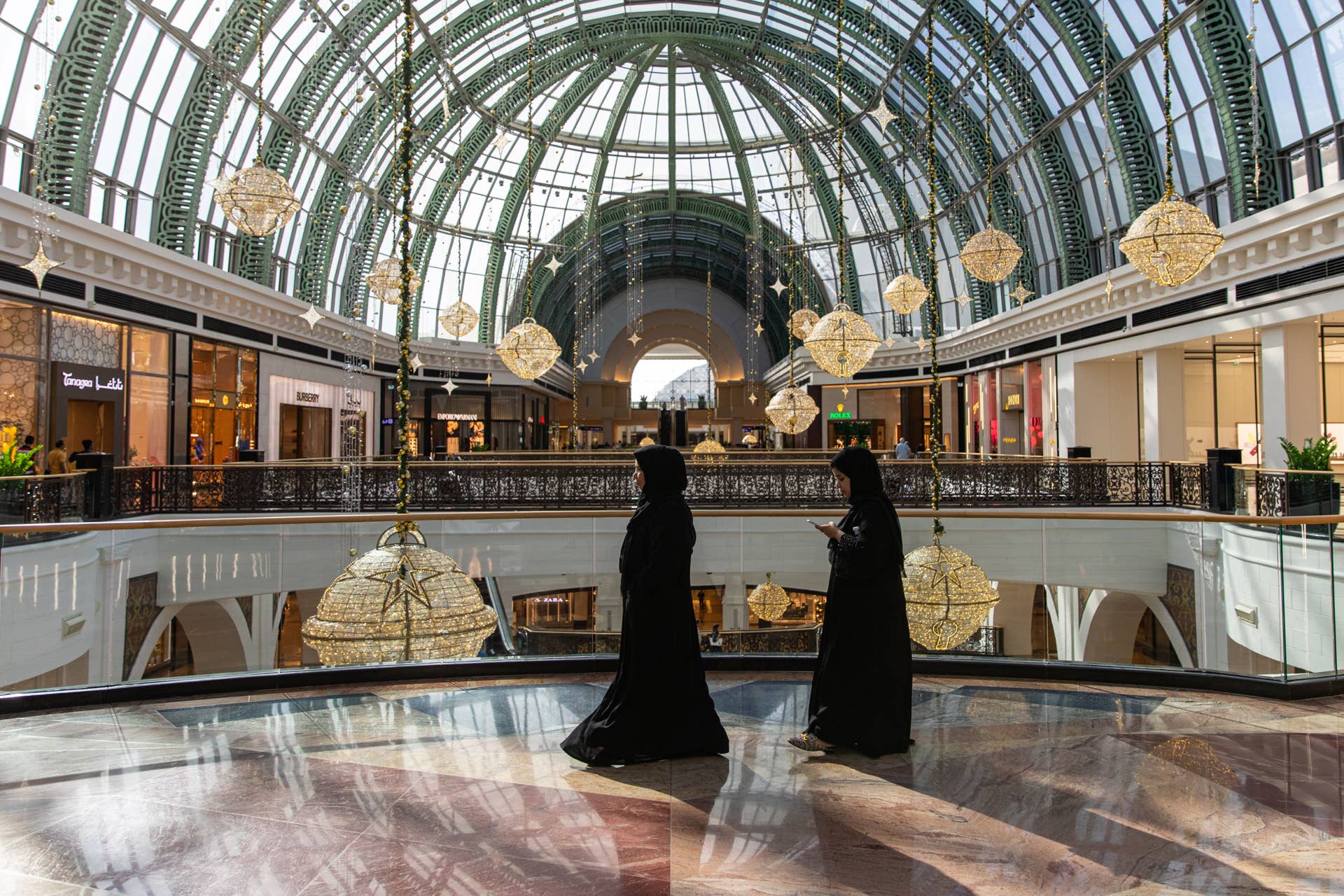
THAT Concept Store has confirmed it will close its Mall of the Emirates location in Dubai, ending its physical retail presence and transitioning into a fully digital business model.
In a statement to WWD, the company described the move as a strategic transformation rather than a retreat. The retailer said it plans to relaunch as a next-generation lifestyle platform with a stronger luxury focus and new experience-led concepts designed for digital consumers.
An official closing date has not been announced, though customers can continue shopping through the company’s e-commerce platform.
Founded in 2021, THAT Concept Store quickly emerged as one of the UAE’s most recognizable multibrand retail concepts, featuring more than 150 regional and international brands.
Its flagship Dubai location became known for its highly curated, experiential shopping model spanning more than 48,000 square feet across two floors. The space blended fashion, beauty, hospitality, and lifestyle services under one roof, including women’s beauty spaces, men’s grooming stations, private shopping services, tailoring, gift wrapping, cafés, and rotating art installations.
Retail analysts say experiential retail concepts have become increasingly important for attracting younger luxury consumers, particularly in highly competitive shopping destinations such as Dubai.
“An effective flagship store attracts new customers and keeps the current loyal ones hooked to the brand,” said Elle Education Business Communications, Branding, and Fashion Culture Expert Fernando Aguileta de la Garza. “The aim of a flagship store is to stimulate the emotional sensations and physical attributes that the brand possesses and showcase them to the customer.”
However, many brands are still struggling to balance premium in-store experiences with rising operational costs and shifting digital demand.
Why THAT Concept Store is closing
The closure comes during a period of major redevelopment at the Mall of the Emirates. Last year, mall owner Majid Al Futtaim confirmed a $1.3 billion expansion and renovation program that has continued into 2026.
The timing also coincides with rising geopolitical tensions across the Middle East following military strikes involving the U.S. and Israel targeting Iran on Feb. 28, 2026. While THAT Concept Store has not publicly linked its closure to the regional conflict, analysts say growing instability is beginning to pressure tourism, consumer confidence, and retail activity across the region.
Security concerns, flight cancellations, and disruptions to international travel have already begun affecting luxury spending patterns in several Middle Eastern markets, where tourism remains a major economic driver.
The UAE’s retail market was valued at $145.3 billion in 2024 and is projected to reach $227.1 billion by 2033, according to IMARC Group. Luxury spending in the region reached approximately $4 billion in 2023, supported by high disposable incomes and strong visitor traffic.
“If you assume that it’s ?a $5 billion to $6 billion (travel retail) market and let’s say it’s going to be shut ?down for a month, we are talking about hundreds of millions of dollars that are definitely at risk,” Kearney Senior Consumer and Retail Consultant Victor Dijon told Reuters.
Christopher Pike/Bloomberg via Getty Images
Retailers brace for prolonged uncertainty
Industry analysts say the long-term impact on luxury retail will likely depend on how long geopolitical instability persists.
“If the war was to end relatively shortly, this would not be a huge issue for the global luxury goods in the states,” Bernstein Senior Analyst of Luxury Goods Luca Solca told Fortune. “If the war was to continue […and] oil and gas prices were staying high, then I think there would be a higher probability of a recession.”
That distinction could prove critical for global retailers. A short-lived disruption may simply delay consumer spending, while a long-term conflict could create broader economic pressure through weaker tourism, declining consumer confidence, rising transportation costs, and inflationary strain.
LVMH Chairman and CEO Bernard Arnault has also warned about the broader economic consequences of escalating tensions in the Middle East, cautioning that prolonged instability could trigger what he described as a “world catastrophe.”
Retail executives across the industry are already reporting declining tourism activity and softer foot traffic in key shopping markets.
“There’s not many tourists or less tourists shopping. That’s clear,” Hugo Boss CEO Daniel Grieder said during an earnings call. “That has an effect on the shopping centers and so forth and for all the brands.”
Several major companies have responded by temporarily scaling back operations across the Middle East this year:
- Kering Group: Temporarily closed stores across Gucci, Saint Laurent, Bottega Veneta, and Balenciaga in the UAE, Kuwait, Bahrain, and Qatar, Reuters confirmed.
- Apple: Shut down all its retail stores in the UAE, TheStreet reported.
- Amazon: Closed its fulfillment center in Abu Dhabi and suspended deliveries, Business Insider noted.
- LVMH: Temporarily shuttered multiple stores across parts of the Middle East, according to TheStreet.
- Chalhoub Group: Closed Versace and Jimmy Choo locations in Bahrain, with many other regional stores operating with voluntary staff, Drapers reported.
What this means for the future of global retail
According to McKinsey & Company’s State of Fashion 2026 Report, the global fashion industry is expected to grow at only a low single-digit rate this year as macroeconomic uncertainty continues weighing on consumer demand.
Retailers are also navigating persistent tariff pressures, cautious consumer spending, and rising expectations around convenience, personalization, and seamless digital experiences, especially in the U.S. market.
Here’s some of my previous coverage showing the strain on retailers:
- Global fashion retailer closing all stores, winding down operations
- Fashion brand shuts down website, all stores may close
- 115-year-old fashion brand exits entire market in 2026
The situation in the Middle East also highlights a broader vulnerability within the luxury retail sector: its heavy dependence on tourism and a relatively small number of high-growth global markets.
When international travel slows or geopolitical instability rises, the effects often ripple simultaneously across retail, hospitality, aviation, and tourism-related industries.
At the same time, the shift toward digital commerce continues accelerating worldwide. Grand View Research valued the global e-commerce market at $33.91 trillion in 2025 and projected it to reach $155.98 trillion by 2033, growing at a CAGR of 21.6%.
Retail analysts at Forrester say long-term survival increasingly depends on a company’s ability to balance operational efficiency, digital innovation, and differentiated customer experiences.
For many traditional retailers, the transition may already be becoming more difficult. As consumers continue shifting online, companies that fail to modernize quickly enough are facing mounting financial pressure, weaker store productivity, and intensifying competition from digital-first retailers.
Related: Another retail chain closing all stores after 33 years in business
#Global #luxury #retailer #closes #final #store #Middle #East #tension