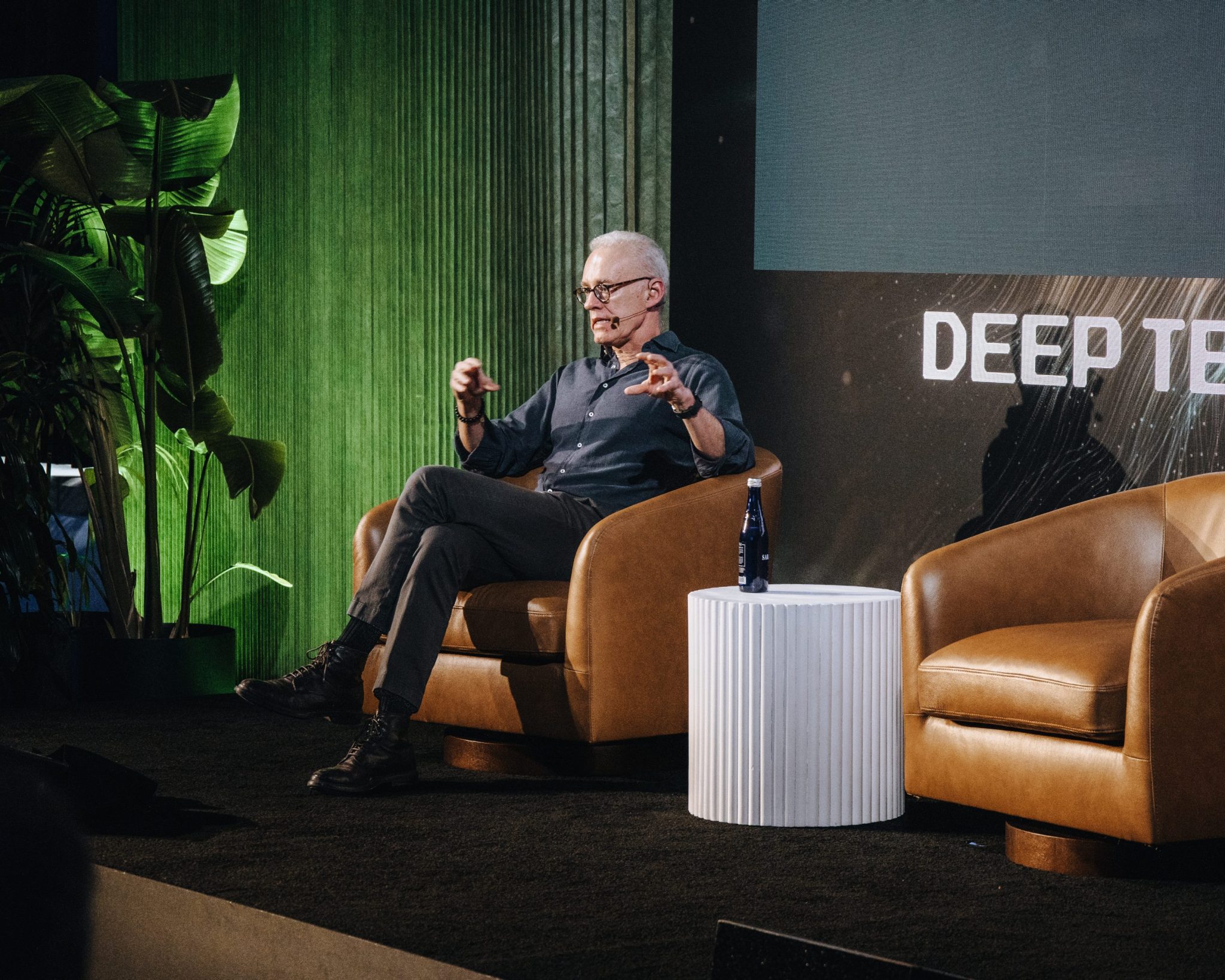
Consider psychedelics: Ryan—often called “the Godfather of NYC Tech”—was once skeptical that psychedelics could be viable treatments for depression or PTSD. But in 2018, he read Michael Pollan’s How to Change Your Mind and encountered a wave of data. Now, he’s a key backer of the Yale Center for Psychedelic Research and cofounded Transcend Therapeutics, a psychoactive drug maker that sold in June for $1.2 billion.
“What I think about is where the world’s going five to ten years from now, and then we need to make a bet when it’s not obvious,” Ryan said. “If it’s obvious, it’s worth $20 billion and it’s too late. So, we’re making bets early. Psychedelics are a perfect example of that.”
Ryan, throughout his career, has cofounded dozens of companies (including MongoDB, Business Insider, Gilt Groupe, and Zola). Many began as incubations through the venture firm he originally founded as a family office in 2007, AlleyCorp. The firm took on outside investors for the first time in 2024, with a $250 million fund that Term Sheet broke the news on. (A source familiar with the firm’s financials said that previous investments have generated an all-time 60% IRR.) Now, as the venture capital landscape has evolved rapidly over the last couple of years, AlleyCorp is back with its $335 million second fund, the firm exclusively told Fortune.
“From our point of view, it hasn’t changed dramatically,” said Ryan. “We just invested last week in a company [at] a $25 million valuation, and they have $500,000 in revenue so far. We need to help them build that business. That’s what we do, and that’s what we were doing six, seven years ago. The fundamentals haven’t changed much. The things we invest in change over time.”
AlleyCorp currently focuses on healthcare, deep tech, and general tech, and has eight unicorns in its current portfolio (that group includes Rogo, ShopMy, Valar Atomics, and Thyme Care). Talking to Ryan made me think about the time warp that’s been the AI boom and venture in recent years. The AI boom was certainly in a very different spot in 2024 (Nvidia was about a $3 trillion company then, now it’s over $5 trillion) and VC’s grown much bigger by the AI-fueled numbers. I point out to Ryan—who originally made his name as CEO of DoubleClick, bringing the company to 1,500 employees and a $1.1 billion sale back in 2005—that 2026 so far has seen $412.7 billion in U.S. venture dollars deployed into just a few companies. The tens of billions that easily plow into Anthropic and OpenAI, Ryan said, are their own category of investing.
“I don’t think that’s venture capital,” said Ryan. “Today, [DoubleClick] would have been private for ten years, and gone public at a $10 billion valuation. If it’s Anthropic, they wait until $1 trillion and it’s all ‘VC money’ but it’s not—these are bigger than public companies…I think you might ultimately see VC dollars invested drop because so much has gone into SpaceX, Anthropic, and OpenAI. If you take those off the table, it’ll seem like VC money is down.”
Ryan says he’s devoted to first checks under $10 million and backing young companies. Though he said there’s a limit, he’s not opposed to eventually raising a larger fund: Ryan defines venture by check size and stage, not fund size.
“Our next fund could be bigger,” said Ryan. “It could be 500, 600 [million]. You can expand in two ways without changing your strategy: One’s verticals, another is geography… Say, if tomorrow, I had a $500 or $600 million fund, I’d consider having two biotech people and a biotech practice. But it doesn’t change anything we do.”
That said, things do change, often in ways we can’t predict or that I certainly wouldn’t have guessed. Sometimes it’s small-enough things: For example, as I talk to Ryan, he’s sitting in the AlleyCorp Building in New York’s Nolita, which opened in June. The last time I’d talked to Ryan in 2024, it was still very much in development—now it’s home to a hot new restaurant and a number of companies and VC firms like Benchstrength and BBG Ventures. I asked Ryan what he thinks we’ll be leaving behind over the coming years, and he said it’s hard to tell.
“I was on some panel in 2017, where [everyone] would have sworn that by 2026, 50% of cars are going to be driverless,” he said. “We’re basically at 0% if you round up. [At the same time] it’s hard to remember how fast everything has been moving [with AI]. I’ve never seen anything like this.”
To this end, we briefly talk about how we’ve both been reading Sebastian Mallaby’s The Infinity Machine: Demis Hassabis, DeepMind and the Quest for Superintelligence.
“The book ends, I think, 12 or 18 months ago,” Ryan told me. “It doesn’t mention Claude, and now that’s all anyone can talk about. It’s almost like your grandmother saying: ‘Do you remember the Spanish-American War?’ And you say: ‘No, we don’t really think about that anymore.’ But we’re talking about the world from 18 months ago.”
There’s a lot of hand-wringing about what it means to operate in an AI-turbocharged-time-warp, where it’s hard to see clearly. And I wonder if part of the answer is simple: That when things move fast, you need to be able to change your mind.
See you tomorrow,
Allie Garfinkle
X: @agarfinks
Email: alexandra.garfinkle@fortune.com
Submit a deal for the Term Sheet newsletter here.
Joey Abrams curated the deals section of today’s newsletter. Subscribe here.
VENTURE CAPITAL
– Walden Robotics, a Cambridge, Mass.-based developer of AI-powered robots, raised $300 million in funding. Toyota and Deviation Capital led the round and were joined by NVIDIA, Boeing, AE Ventures, Samsung Ventures, Prologis Ventures, CoreWeave Ventures, and others.
– Singularity, a Los Angeles-based developer of low-cost air defense systems, raised $80 million in Series A funding. Felicis and Khosla Ventures led the round and were joined by AE Industrial Partners, NEA, Long Journey, Harpoon, Menlo Ventures, and others.
– State Affairs, a Washington, D.C.-based AI-powered intelligence platform designed for the policy economy, raised $70 million in funding from Founders Fund, Khosla Ventures, Tru Arrow Partners, and others.
– InstaLILY, a New York City-based developer of an AI-forward deployed engineer, raised $60 million in Series B funding. Energize Capital led the round and was joined by Insight Partners, Home Depot Ventures, and United Rentals.
– Corner Health, a Los Angeles, Calif.-based platform designed to help nurse practitioners start their own primary care practices, raised $32.5 million in seed and Series A funding. Oak HC/FT led the Series A round and was joined by First Round Capital and Zigg Capital.
– Feathery, a San Francisco-based AI operating and decisioning system for financial services, raised $30 million in funding from Portage Ventures, Index Ventures, Allstate Strategic Ventures, and others.
– Hadrius, a New York City-based compliance AI startup, raised $27 million across seed and Series A rounds. CRV led the funding and was joined by Y Combinator, Pathlight Ventures, and others.
– Rime, a San Francisco-based enterprise voice AI platform, raised $24 million in Series A funding. M13 led the round and was joined by Twilio Ventures, Corazon Capital, Unusual Ventures, and existing investors.
– Thira, a Bellevue, Wash.-based creator of a secure, self-learning AI system of execution built for the enterprise, raised $21 million in seed funding. Madrona led the round and was joined by FUSE and others.
– Pulse Security AI, a San Francisco-based operational management platform for security, raised $8 million in seed funding. Foundation Capital led the round and was joined by Zetta Venture Partners and angel investors.
– NextGo EPI, a Berlin, Germany-based developer of materials designed to make electric vehicles, renewable-energy systems, and other electronics more efficient, raised $2.3 million in pre-seed funding. Ultratech Capital Partners and Viero Ventures led the round and were joined by others.
PRIVATE EQUITY
– Igneo acquired Cyntox Biohazard Solutions, a Jackson, N.J.-based medical waste management company, and AdvoWaste Medical Services, a Lakewood, N.J.-based medical waste management company. Financial terms were not disclosed.
– IMB Partners acquired Strategic Land Services, an Oakwood, Ga.-based site preparation and infrastructure services contractor for electric utility projects. Financial terms were not disclosed.
– Infrastructure Consulting & Engineering USA, backed by Godspeed Capital, acquired Southeastern Land Company, a Myrtle Beach, S.C.-based engineering, consulting, and infrastructure services platform. Financial terms were not disclosed.
– Odyssey Investment Partners acquired a majority stake in TransPak, a San Jose, Calif.-based packaging, logistics, and testing solutions provider designed for high-tech industries. Financial terms were not disclosed.
– TRG, a portfolio company of Gemspring Capital, acquired Barcode Supply, a Greensboro, N.C.-based provider of barcode, RFID, labeling, and data capture solutions. Financial terms were not disclosed.
– VetnCare, backed by Great Point Partners, acquired Holistic Veterinary Care, an Oakland, Calif.-based veterinary hospital. Financial terms were not disclosed.
FUNDS + FUNDS OF FUNDS
– Greylock, a San Francisco-based venture capital firm, raised $1.5 billion for a new fund focused on companies using AI across the infrastructure, cybersecurity, applications, deep tech, consumer and fintech companies.
PEOPLE
– Garnett Station Partners, a New York City-based investment firm, promoted David Dragich and Rafi Haramati to partner, Mike Drittel to Managing Director, Will Edmonds to Principal, and Sam Abbatavola to Vice President.
– GenNx360 Capital Partners, a New York City-based private equity firm, appointed Adam Feuer as Operating Partner. Previously, he was with One Rock Capital Partners.
#Kevin #Ryans #AlleyCorp #raises #million #fund #earlystage #bets