The latest flare-up of tensions over the Strait of Hormuz is threatening fresh global supply disruptions way beyond oil and gas.
The Middle East is not only home to top OPEC nations, but also a leading producer of raw materials that play a crucial role in everything from the chips that power artificial intelligence to food staples in the supermarket.
Here are the commodities to watch beyond energy as worries about the war’s complex impact on the global economy rise to the fore.
Fertilisers
The Persian Gulf is home to major fertilizer producers including Qatar Fertiliser, Fertiglobe Plc and Saudi Basic Industries Corp, and the Strait of Hormuz acts as the vital artery connecting their exports to agricultural powerhouses around the world.
Often overlooked, fertiliser underpins global food production. The last time conflict flared, India — the world’s biggest urea importer — paid nearly double pre-war prices to secure supplies. This time, as the agricultural calendar shifts to the Southern Hemisphere, countries such as Brazil are particularly exposed. Any disruption to fertilizer supplies risks reducing crop yields, with knock-on effects for global grain supplies and food prices at a time when extreme weather is also a threat.
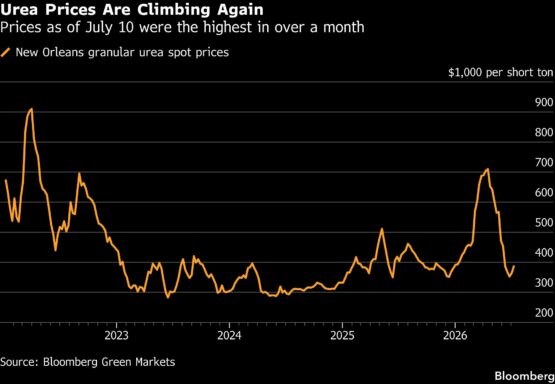
The Middle East turmoil comes with a double blow. The energy infrastructure needed to produce ammonia and urea is at risk, while shipping routes out of the Persian Gulf are under renewed pressure. Unlike the early days of the conflict, when stranded ships acted as floating storage, already wary shipowners are now avoiding the region, threatening not only exports but production itself. Urea prices in New Orleans — a key global benchmark — climbed 6.2% over the seven days to July 10, the biggest weekly increase in more than three months.
ADVERTISEMENT
CONTINUE READING BELOW
Sulfur
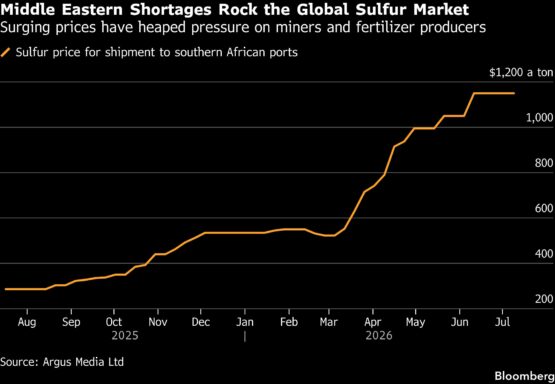
Middle Eastern oil and gas majors also produce vast quantities of sulfur, and supply disruptions have added to the pressure on the global agricultural supply chain. The element is a key feedstock in the production of phosphate fertiliser, with shortages forcing plants in Brazil, the US and Morocco to cut output.
Surging prices thrust buyers in the agricultural sector into a bidding war with other industries that rely on sulfur and derivatives like sulfuric acid, which is crucial in some methods of copper and nickel production.
Traders have said that sufficient supplies of sulfur are available for those who can pay the price, and so far the main impact for miners has been an erosion of production margins.
But the cost increases have been much harder to bear in the agricultural industry, and a reignition of disruptions could quickly ripple through the fertiliser markets, potentially tightening supplies and lifting prices.
Some Middle Eastern cargoes have reached India in recent weeks, helping to “ease the worst of the situation,” according to Maria Mosquera, editor for sulfur products at Argus Media. But since last week, crossings through Hormuz have again come to a standstill, she said.
ADVERTISEMENT:
CONTINUE READING BELOW
Aluminum products
The Middle East accounts for nearly a 10th of global aluminum production, and smelters there have an even more outsized role as suppliers of specialised aluminum products used extensively in car-making, construction and aerospace.
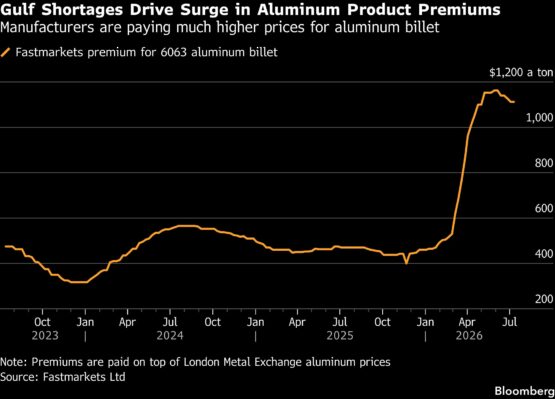
While the overall supply impact on the market for commodity-grade aluminum has been blunted by logistical workarounds in the Persian Gulf and rising exports from China and Indonesia, buyers are still facing a major squeeze on supplies of products like aluminium billet.
The surcharges that manufacturers pay to secure supplies of aluminium billet surged at the start of the conflict, and only softened partially after an interim peace deal was signed in June. While producers may export via alternative ports if the Strait of Hormuz remains closed, additional costs and delays would likely keep those premiums elevated.
Helium
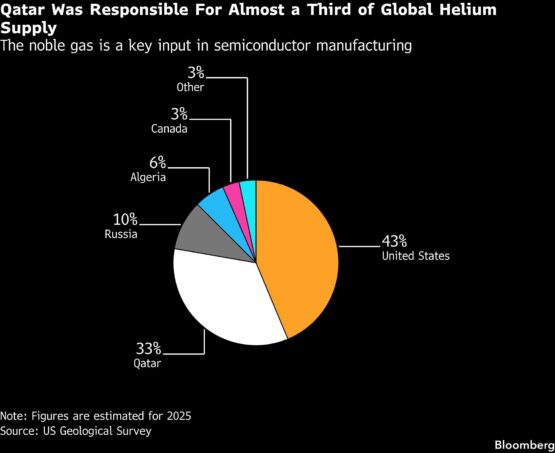
Qatar’s Ras Laffan industrial complex, best known as the world’s largest liquefied natural gas export facility, was also responsible for around a third of the world’s helium supply before the Middle East turmoil erupted at the end of February.
ADVERTISEMENT:
CONTINUE READING BELOW
Obtained as a by-product of natural gas, helium has a range of industrial applications, from car airbags to MRI scanners. But by far its most important use is in semiconductor manufacturing, where it’s a key input in building the chips powering the AI boom. Because of its unique qualities that help cool and protect silicon wafers, it’s difficult to replace, and chip manufacturers have been seeking alternative suppliers and drawing down inventories to offset the shortfalls.
As helium isn’t exchange-traded, the impact on its price from the closure of Hormuz is difficult to discern. By the estimates of Phil Kornbluth, a helium market consultant with over 40 years of experience in the industry, the spot price has at least doubled since March, and the market has been characterised by a “significant” supply shortage.
Supply is also constrained by other factors. China introduced ad hoc export restrictions on helium last Friday to conserve its own supplies, while Ukrainian attacks have dented Russian output.
“The industry has some ability to replace the low supply from other places,” said Kornbluth in a phone interview. But if the Iran war drags on, the crunch “will get worse, because the inventory that folks are relying on right now will eventually deplete.”
© 2026 Bloomberg
#Hormuz #tensions #put #commodity #supplies #risk #oil