The future of U.S. roadways will feature a lot more automated vehicles, so the country must work out the kinks now before the AV population starts really increasing.
One of the biggest issues already poking its head through is the multiple instances of automated vehicles driving through or otherwise ignoring emergency response situations where the police or first responders are involved.
The tragic mass shooting in Austin, Texas, earlier this year is a prime example of this.
Police and first responders raced to and from the scene where two people were killed and 14 were injured, but one emergency vehicle was filmed being severely delayed by an obstruction in the road that refused to move: a malfunctioning Waymo. Eventually, a police officer opened the vehicle and moved it, but by the time he did, the ambulance’s human driver had already navigated around the malfunctioning Waymo.
“As our protocols are designed and we’ve trained first responders to do, a police officer disengaged the vehicle, and our roadside assistance team retrieved it,” Waymo said in a statement to 11Alive at the time.
That wasn’t the first time Waymo vehicles have failed to navigate emergency situations properly.
In February, a driverless Waymo vehicle with a passenger in the back drove into the middle of an active police scene before stopping in Atlanta, Georgia.
A local television news station that had been covering Waymo’s failure to stop at school buses with their stop signs deployed just happened to be on the scene, filming the police standoff with an armed suspect, who had fired at law enforcement, grazing one in the head.
Now the NHTSA is saying that not only Waymo, but other robotaxi operators like Tesla and other automated vehicle makers need to tighten up their protocols.
NHTSA issues call to action over AVs interfering in emergency situations
This week, in a letter dated July 8, the National Highway Traffic Safety Administration issued a call to action for all AV makers to fix the glitch causing their vehicles to ignore emergency situations.
While admitting that it believes in the “immense potential” of AV technology to “reduce human error and improve safety” on the nation’s roads. Still, the regulatory bodies tasked with safeguarding the country’s streets have “documented multiple instances in which AVs drove directly into active emergency scenes, blocked the paths of ambulances and firefighters, or failed to recognize and respond to basic safety conditions like flashing lights, flares, smoke, fire, and traffic cones.”
The letter called the AVs’ inability to navigate those situations a “functional insufficiency” that the agency expects to see progress on soon. The NHTSA says it will schedule meetings with AV system developers “by month’s end” to hear about how they plan to fix this problem.
“Let me be clear: the inability to detect and appropriately respond to such situations represents a functional insufficiency,” NHTSA Administrator Jonathan Morrison said. “Emergency scenes are not rare or extreme ‘edge cases.’ As such, NHTSA is today issuing a call to action for AV developers and operators to immediately focus their resources on fixing this issue.
Waymo did not immediately respond to a request for comment.
Heather Diehl / Getty Images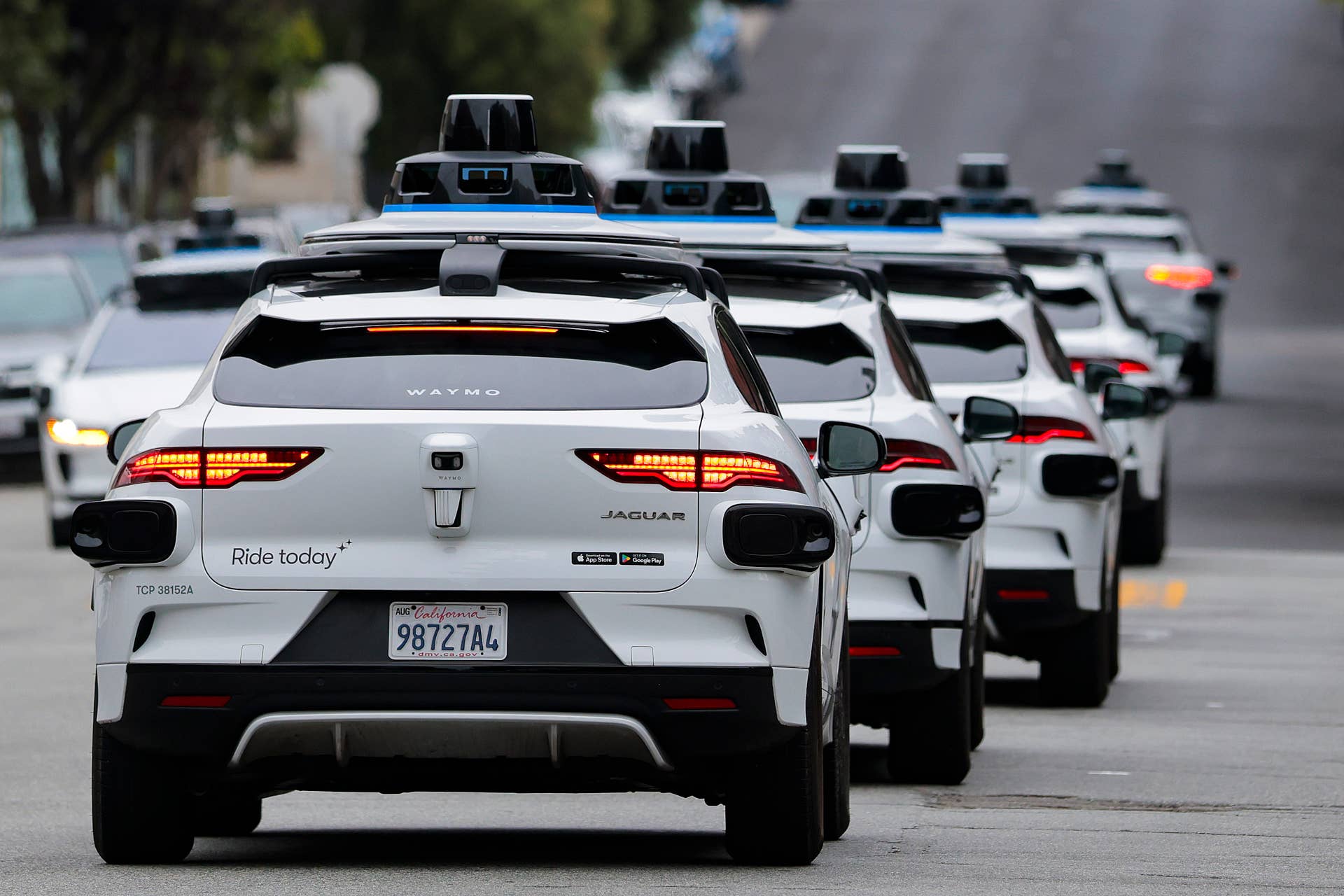
U.S. Senators question Tesla FSD safety data
Last month, Reuters reported that Tesla was exaggerating its safety claims for FSD and that it is using a team of “data labelers” to help the AI that powers FSD be better.
This revelation suggests that Elon Musk’s declaration that FSD is already up to 10 times safer than human drivers and ready for more widespread adoption is hollow.
So Senators Edward Markey (D-MA) and Richard Blumenthal (D-CT) sent a letter to the National Highway Traffic Administration saying the Reuters report exposes “dangerous gaps” in its autonomous vehicle data collection.
“Tesla has repeatedly told investors, consumers, and the public that FSD is far safer than human driving, but the data analysis justifying those claims is weak and misleading. These representations are not merely marketing claims; they may shape how drivers use Tesla’s FSD, how the public understands the risks of the technology, and how regulators evaluate potential safety defects,” the letter stated.
According to the letter, Tesla’s data to come up with the “10 times safer” is flawed for several reasons, including:
- Comparing unlike crash outcomes that made Tesla look better.
- Comparing newer Tesla vehicles to the entire U.S. vehicle fleet.
- Counting FSD involved crashes only if it is active at the time of crash or within five seconds. The NHTSA uses a 30-second time threshold for all ADAS systems.
- Relying on incomplete automated telemetry.
Tesla is cooking the books, according to the Senators and the NHTSA has not been able to get the real data it needs, which makes the whole situation more dangerous for drivers.
“The push to allow more autonomous vehicles on public roads depends heavily on the claim that these driving systems are safer than human drivers,” the letter stated.
“To the extent that Tesla or other vehicle manufacturers are misleading the public about their safety data, however, consumers may choose to purchase or ride in an AV based on the unproven expectation that they are safer than non-autonomous vehicles. This type of information asymmetry is a classic market failure, which will likely result in more AVs on the road — and potentially more traffic injuries and fatalities if those systems are not in fact as safe as they claimed.”
Currently, the NHTSA does not require vehicle manufacturers to submit data on the number of vehicles they operate, the distances they travel, and other data that could help contextualize crash rates.
They say that is the type of data that “would help prove or disprove Tesla’s safety claims.”
So the Senators are asking the agency to “significantly expand autonomous vehicle data reporting requirements.”
Related: Waymo outages disrupt traffic in this major city yet again
#Waymo #Tesla #fix #dangerous #issue #robotaxis #NHTSA