Investors seeking to insulate their portfolios against turbulence should increasingly look beyond government bonds, which appear to be losing their traditional safe-haven status, according to Standard Bank’s head of G10 strategy.
Steven Barrow wrote in a note on Monday that more investors could follow the example of Australian asset manager AMP, which said last week it was scaling back government bond holdings amid evidence the securities are no longer acting like safe assets. Should the trend gather momentum, it could present funding challenges for governments, he said.
Read:
African economies bounce back as energy prices tumble, PMIs show
13 years of UCount Rewards: Helping consumers with their everyday spend
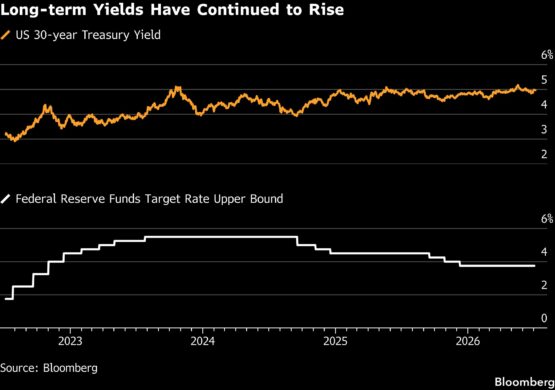
Barrow pointed out that bond prices fell alongside stocks and other risky assets during recent bouts of market stress, including the Middle East war, instead of rallying as a safe asset would typically do. In addition, yields on longer-dated bonds continued to rise even when central banks cut interest rates following the 2022 inflation peak, he noted. That’s a highly unusual development which suggests, at least, that “something is wrong with the bond market.”
ADVERTISEMENT
CONTINUE READING BELOW
“Putting all this together we think there is a strong argument to be made for the fact that the loss of safe-haven status and the change in bond ownership are bad omens for the bond market,” Barrow told clients. “As a result, we view longer-term structural shifts from government bonds to other assets as the right way to go.”
Doubts about the safety credentials of Treasuries and other sovereign bonds have been growing in recent years, especially after the pandemic forced a surge in borrowing and concerns mounted over the Federal Reserve’s independence. Data and surveys suggest that central banks, typically the biggest holders of government bonds, are diversifying into other assets such as gold, and plan to continue doing so.
Other funds, including AMP, are favoring corporate bonds, while many are even increasing exposure to equities on expectation that inflation will erode the value of fixed income.
The impact has been felt most in the long end of the bond market. Yields on 30-year Treasuries are currently around 5%, up from 4% when the Fed embarked on its last rate-cutting cycle in September 2024. By the time it wound up the rate cuts last December, yields were at 4.8%.
ADVERTISEMENT:
CONTINUE READING BELOW
Read:
Standard Bank becomes Africa’s first authorised renminbi clearing bank
Standard Bank directs R3.45bn to climate-smart agriculture
Barrow said the key question now is whether the loss of safe-haven status represents a long-term structural shift for the government bond market, or a short-term phenomenon.
“If it is the former we should expect more such reallocation from government bonds to other assets by pension funds and alike and that could be problematic for governments, especially those with rising debt,” he said.
© 2026 Bloomberg
#Standard #Bank #warns #flight #sovereign #debt